










“By avoiding common submission errors, brokers can fast-track tree care insurance quotes, reducing friction during peak submission season and helping minimize coverage gaps.”
– Tim Greifenkamp, TreePro Program Manager
In high-hazard industries like tree care, peak submission season can often result in costly delays or coverage gaps. As submission volumes increase, underwriters look for clean, complete applications that allow them to fast-track reviews. While certain questionnaire details might seem insignificant or irrelevant, failing to itemize payrolls or document subcontractor risk management controls could result in manual reviews and weekslong delays. By avoiding common submission errors, insurance brokers can help their tree care clients bypass underwriting bottlenecks and minimize coverage gaps that can occur when applications are inaccurate or incomplete.
What Do Underwriters Look for in Tree Care Submissions?
Arborist insurance programs are designed to cover the high-risk work of tree care, including an increased risk for injury, equipment losses, and damage to third-party property. As a result of the arboriculture industry’s heightened risk profile, tree care underwriting guidelines are notoriously strict.
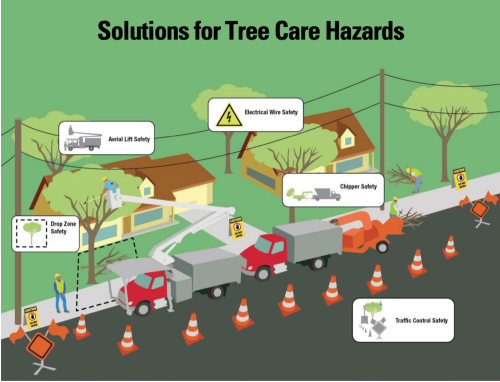
Source: osha.gov/sites/default/files/publications/OSHA3940.pdf
When underwriters review arborist insurance applications, they typically look at:
- Scope of work: The services offered, types of clients (i.e., commercial versus residential), and high-hazard activities such as utility line clearing, felling trees, herbicide application, and pruning at extreme heights.
- Equipment schedules: The type, age, value, and maintenance history of any company equipment.
- Vehicle fleets and drivers: The number and type of vehicles in the company’s fleet, how the vehicles are used, and the number of drivers.
- Workforce classifications and credentials: The job function of employees on the payroll, such as ground crews and arborists, as well as any relevant state licenses or industry certifications.
- Subcontractor agreements and controls: The methods used for contractual risk transfer, such as certificates of insurance, hold-harmless agreements, and other provisions.
- Claims history and safety record: The company’s safety record, including loss runs from the past five years and any safety incidents or violations.
- Safety culture: The company’s current safety management practices, training, and controls, as well as online photos or other indications of a company’s approach to safety protocols.
5 Common Mistakes in Tree Care Submissions
During peak submission season, brokers who reduce friction and speed up quoting can deliver even more value to clients and prospects. That’s why it’s so important to recognize and avoid some of the most common errors underwriters encounter on tree care service insurance applications.
- Misreporting payroll: Underwriters need to know about the company’s operations, which is why they ask for payrolls for each type of service. Underreporting or misclassifying tree service payrolls can have severe consequences, which may include denied claims, audits, retroactive price increases, and even the possibility of criminal charges.
- Omitting maximum working heights: Failing to disclose specific working heights can trigger administrative review, which can delay processing times. Since high elevations affect risk, work classifications, and more, underwriters must know the exact heights at which crews operate so they can evaluate the application and price the policy.
- Concealing high-hazard exposures: Certain high-risk operations, such as utility line clearing, can change eligibility, pricing, and coverage options. As a result, any such exposures should be listed on the application.
- Skipping detailed equipment schedules: Submitting an application without a complete schedule of values for machinery and other equipment can force manual reviews, slowing turnaround times or resulting in uninsured equipment.
- Leaving out subcontractor risk transfer: Companies that utilize subcontractors must provide proof of risk transfer, such as certificates of insurance or hold-harmless agreements. Since tree care subcontractor insurance isn’t covered on most commercial policies, underwriters will typically pause their review until they receive clarity on the business’s relationship with the subcontractor.
How Better Submissions Can Improve Client Outcomes
Better submissions — like those that include detailed safety narratives and comprehensive documentation — can help accelerate approval timelines, eliminate guesswork, and improve client outcomes. By providing a complete application up front, brokers can help their clients get faster, more accurate tree care insurance quotes. In addition to quicker turnaround times and potentially better pricing, a thorough application can also help protect tree care companies by uncovering risks and highlighting exclusions.
Hypothetical Case Study: Two Submissions, Two Opposing Outcomes
Two arborists — each with similar businesses, revenues, and risk exposures — submitted tree care insurance applications but experienced two very different outcomes. One company’s broker provided a flawless submission with itemized payrolls, explicit working heights, and subcontractor certificates of insurance. The file was fast-tracked and within three days the company was able to bind the policy at the preferred-rate pricing, allowing it to secure large seasonal contracts ahead of schedule.
The competitor company rushed its application, lumping 100% of its payrolls under tree trimming, leaving several form fields blank and failing to produce any documentation of its relationship with subcontractors. The underwriter immediately flagged the application and paused the review, triggering a four-week hold. Because of the delay, the company missed a bidding window for a lucrative government contract.
How TreePro Helps Streamline the Submission Process
TreePro by NIP Group offers both the industry expertise and specialty insurance solutions brokers and their clients can count on. As a partner that understands the unique risks and needs of tree care companies, TreePro makes it easy to submit your accounts online and get a quick, competitive quote. By asking the right questions up front and providing access to dedicated program managers, TreePro’s application can help expedite review processes by collecting critical risk information, minimizing manual reviews and administrative delays.
Ready for better tree care coverage by design? Speak with an expert or submit your accounts online today.
8 Tips for Better Tree Care Submissions