







Summary
- Missing erosion control construction steps invite permit violations and costly liability exposure.
- Matching erosion control systems to your site conditions cuts that risk substantially.
- This blog covers what erosion control construction requires, including the right materials and coverage.
On August 3, 2026, the EPA published its proposed 2027 Construction General Permit for public comment. This permit will replace the 2022 CGP, which expires February 16, 2027. A contractor running erosion control construction work needs to track this shift closely.
New permit language changes what inspectors check for on-site.
It also changes what your compliance paperwork needs to show. A control that meets today’s standard could fall short once the new permit takes effect. Catching that gap now costs far less than catching it after a citation.
In this blog, we walk through the methods and materials, along with the coverage you need. This applies whether you’re under the current permit or the next one.
Must Read: Excavation Insurance for Contractors: What Changes When Your Business Grows
What Is Erosion Control in Construction?
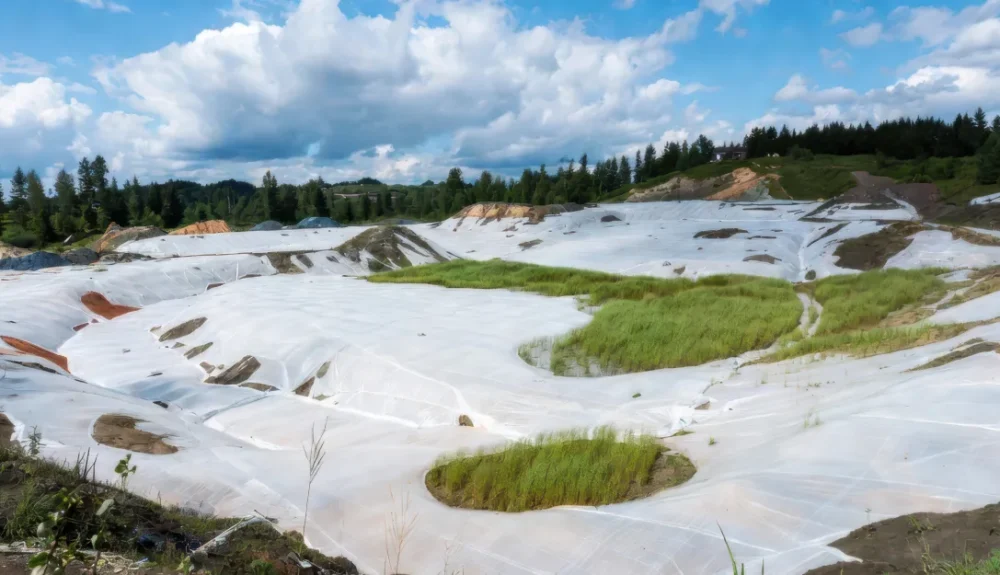
Erosion control in construction means using physical and biological methods to stop soil from washing or blowing off a job site. Grading and excavation clearing strip away the vegetation that normally holds soil in place. Once that soil sits exposed, wind and rain move it within hours.
Erosion control stops that movement before it turns into sediment runoff or a drainage complaint. It keeps loose soil off nearby properties and out of storm drains and waterways. It also keeps your site aligned with federal and state stormwater permit conditions. Effective erosion control construction starts before the first cut. Your methods should match your site’s slope and soil type, as well as drainage path.
Why Erosion Control Construction Isn’t Optional
Erosion control construction becomes a legal requirement once your site disturbs one acre or more. That size triggers a Clean Water Act stormwater permit. Smaller sites need one too, if they’re part of a bigger development plan.
Once you’re under permit, EPA rules spell out what you must do. You need to put erosion controls in place and keep them working. You also need to stabilize the ground if work stops for more than 14 days. Miss that window, and a routine job can turn into a violation fast.
However, permits are only half the story. General contractors and property owners want proof you’re covered before they sign anything. Your excavation business insurance needs to match the risk your work brings to the site. Without it, you risk losing bids before the work even starts.
Regulatory pressure on erosion control construction is only getting heavier. The Business Research Company projects the global erosion and sediment control market to grow from $3.84 billion in 2026 to $4.97 billion by 2030. Tighter regulation and rising construction activity are driving that growth. In practice, it means more contractors are treating erosion control as a standard cost of doing business. Your insurance needs to keep pace with that same reality.
Must Read: Excavator Equipment Insurance: How to Protect Your Fleet from Today’s Biggest Jobsite Threats
Erosion Control Systems and Materials That Truly Hold Up
Erosion control systems vary by slope and soil type. Choosing the wrong one wastes money and still leaves you exposed. Here are the methods and materials that show up on almost every active job site, and what makes each one work.
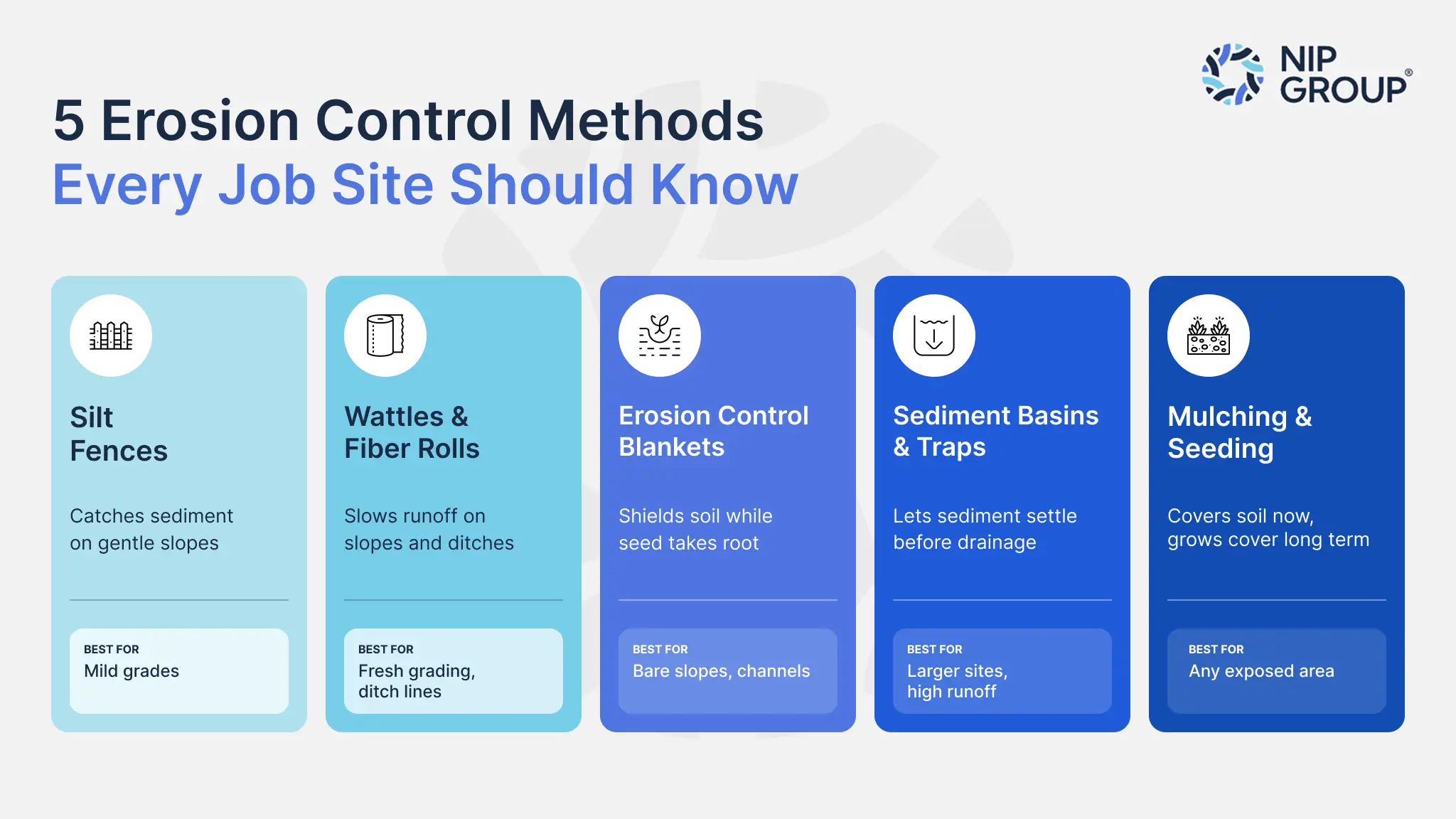
Silt Fences
It’s a woven fabric barrier, trenched into the ground and held up by posts. It catches sediment as runoff tries to pass through. Silt fences work best on gentle slopes with small drainage areas. On steeper ground, posts shift, and the fabric can pull loose.
Wattles and Fiber Rolls
These look like long tubes, packed with straw or coconut fiber and wrapped in mesh. Crews lay them along slopes or across ditches, right in the path of the runoff. Water slows down when it hits the wattle. Sediment settles out instead of washing downhill. These hold up well on freshly graded slopes and in ditches where a silt fence would not stay put.
Erosion Control Blankets and Mats
It’s a fiber layer pinned down over bare soil. It shields the surface from rain while the grass seed underneath gets a chance to grow. Once vegetation takes hold, the blanket breaks down on its own. This is a common fix for slopes and channels that need cover fast.
Sediment Basins and Traps
They are dug-out depressions that collect runoff before it leaves the site. Water sits in the basin long enough for sediment to settle before it drains further. Basins suit larger sites with more runoff. Smaller sites usually get by with a sediment trap instead.
Mulching and Seeding
Mulch covers bare soil and softens the impact of rain right away. Seeding is the longer-term fix, growing vegetation that holds soil for good. The two work as a pair. Mulch protects the soil while the seed takes root underneath.
Picking the right materials only gets you halfway there. How you install them decides whether they hold up once a storm hits. A 2025 field study on a US Highway 30 project in Iowa tested standard designs against modified ones. A wattle ditch check with a fiber underlay and tighter staking caught 12 times more sediment than the standard version. A modified silt fence caught 4 times more.
The materials stayed the same in both cases. Only the installation changed. That is the detail crews tend to rush, and it decides whether your erosion control measures work.
5 Erosion Control Methods Every Job Site Should Know
What’s at Stake When Erosion Control Fails
A missed erosion control construction step rarely stays contained to the job site. What starts as a torn silt fence can turn into a permit violation within hours. Here’s how that plays out in practice.
Stop-work Orders
Inspectors do not wait for a second visit. One failed control can shut down active work on the spot. Every day of downtime pushes your schedule back and still costs you in payroll.
Civil Penalties Under the Clean Water Act
Sediment discharge without proper controls counts as a violation under the Clean Water Act. The EPA enforces this through its NPDES construction program, and penalties scale by the day. On a tight-margin project, that exposure adds up fast.
Downstream Property Damage
Sediment that reaches a storm drain or a neighboring property becomes your liability. Cleanup costs often exceed what a basic general liability policy anticipates, since pollution damage sits outside standard coverage.
Disputes with the General Contractor
A failed erosion control plan can delay other trades and the whole project. The GC may hold you accountable for that fallout. It is the kind of dispute that strains a relationship you rely on for future work.
Claims That Surface After the Job Ends
A drainage issue or slope failure can trace back to your grading work months later. Standard general liability may not respond if the claim falls under a pollution exclusion.
The Coverage That Backs Up Your Erosion Control Construction Work
Good erosion control construction practices lower your risk. They cannot remove it completely. A storm can still overwhelm a silt fence. An inspector can still catch a gap you missed.
SitePro is built for grading and excavation contractors facing exactly this exposure. It pairs general liability with jobsite pollution coverage, so incidents that a standard policy excludes still get a response. Contractors’ pollution liability and inland marine coverage protect your equipment on-site. The carrier behind SitePro holds an A+ (Superior) rating from A.M. Best, meaning it has the financial strength to pay claims when you need them. Ask your broker to sign you up for SitePro, or contact us today to get a policy built around what your jobs need.
FAQs
1. What are examples of erosion control?
Retaining walls, terracing, riprap, and vegetative buffers are common examples beyond the fabric and mat-based methods used by the excavation contractors. Retaining walls hold back soil on steep grades. Terracing breaks a slope into flatter steps. Riprap uses rock to armor channels and shorelines against fast-moving water.
2. What can naturally cause erosion?
Rain and wind are the biggest natural drivers, but a few conditions make them worse:
- Steep slopes: Water speeds up on a slope with little vegetation to slow it down.
- Loose or sandy soil: This soil breaks apart and washes away fast.
- Freeze-thaw cycles: Ice cracks the surface soil and loosens it before spring rains.
- Heavy rain on bare ground: With no roots to soak it up, water carries the soil away.
3. Which is more effective, erosion control or sediment control?
Neither works well without the other, so it is not really a competition. Erosion control keeps soil from moving in the first place, while sediment control catches what gets past it. A strong stormwater plan builds both into the site from day one, instead of one as a backup for the other.
4. What is the most affordable way to prevent erosion?
Mulching and seeding cost the least on most construction budgets. They work well together, but each does a different job:
- Mulch goes down fast over bare soil and protects it right away.
- Seeding comes next, once grading slows down, to bring back long-term ground cover.
Both suit flat or low-risk ground. Steeper, active slopes still need silt fences or basins to hold up properly.