Summary
- A single misjudged cut can turn a routine felling job into a costly mistake fast.
- Never do this when cutting down a tree, and know the missteps that keep crews safe instead.
- This blog covers 9 mistakes along with safer felling steps and the coverage that backs your crew.
If you run a crew that fells trees for a living, you already know how fast one bad call turns into a bad day. Tree work sits near the top of every list of dangerous jobs in the country, and most incidents trace back to the same handful of repeated errors.
According to a Tree Care Industry Association analysis of OSHA and industry fatality data, tree workers face a fatality rate as much as 11 times higher than the all-industry average. That estimate is built on 243 tree care-related fatal injuries the association tracked across the country.
Numbers like that explain why a label like “never do this when cutting down a tree” carries real weight in this trade. It marks the line between a routine job and an incident report.
Why Every “Never Do This When Cutting Down a Tree” Warning Exists
TCIA figures covering 2022 through 2024 show the median tree worker is around 37 years old, younger than most people assume. Younger crew members also account for a larger share of fatalities than their share of the workforce would suggest, which points to a gap in hands-on experience rather than a gap in equipment.
Storm season raises the stakes further. NOAA’s 2026 Atlantic hurricane outlook calls for a below-normal season, but the agency’s own administrator has been clear that it only takes one storm to overwhelm that forecast. When storm cleanup jobs pile up, crews move faster. So, speed is exactly where a mistake finds its way into an otherwise careful crew’s routine.
9 Things to Never Do When Cutting Down a Tree
None of these mistakes look serious at the moment. But every one of them can put a crew member at risk.
Mistakes Made Before the First Cut
-
Skipping the hazard walk-around.
Everyone wants to get the saw running. But take five minutes first. Walk the site and look up for power lines. Look around for fences, sheds, and parked cars. Check what sits inside the drop zone. That short walk catches problems a rushed glance never will.
-
Underestimating the tree’s size and weight.
A trunk that looks manageable from the ground carries more weight than most crews expect. Get that estimate wrong, and the tree stops falling where you planned. It falls where its weight decides to take it, and that difference is rarely small.
-
Treating a rotted or unstable tree like a healthy one.
Decay and disease with a heavy lean change how a tree behaves under the saw. Never do this when cutting down a tree that shows any of these warning signs: run your usual process without adjusting for what’s in front of you. Slow down and reassess first.
Must Read: Tree Cutting Equipment Every Contractor Needs (What Really Works in 2026)
Mistakes Made During the Cut
-
Guessing at the felling direction.
How to fell a tree in a specific direction comes down to three things: the lean, the wind, and where the weight sits. Read all three before you commit to a cut, because guesswork is how a controlled drop becomes an uncontrolled one.
-
Rushing the notch and backcut.
Storm season fills up your schedule fast. The best way to cut a tree down is to take that extra minute anyway. A rushed backcut is where kickback happens, and where the tree ends up somewhere it shouldn’t.
-
Cutting before the escape route is clear.
A cluttered exit path, whether it’s a saw case or loose branches, slows you down at the exact moment speed matters most. So, clear it before the first cut goes in.
Mistakes With Gear, Crew, and Communication
-
Running a poorly maintained chainsaw
A weak chain brake or worn safety feature changes how the saw reacts under load. Check your equipment before every shift instead of trusting it blindly.
-
Skipping PPE or wearing gear past its useful life.
A cracked helmet or a fraying harness can still look fine from a distance. But it won’t hold up the way it needs to when something goes wrong. So, set a replacement schedule for your gear instead of waiting for it to fail on the job.
-
Working without a spotter or a clear signal.
The person running the saw can’t watch every angle at once. However, the second set of eyes closes that gap. So, agree on your signal before the first cut.
Must Read: How to Evaluate Insurance Needs for a Tree Trimming Service
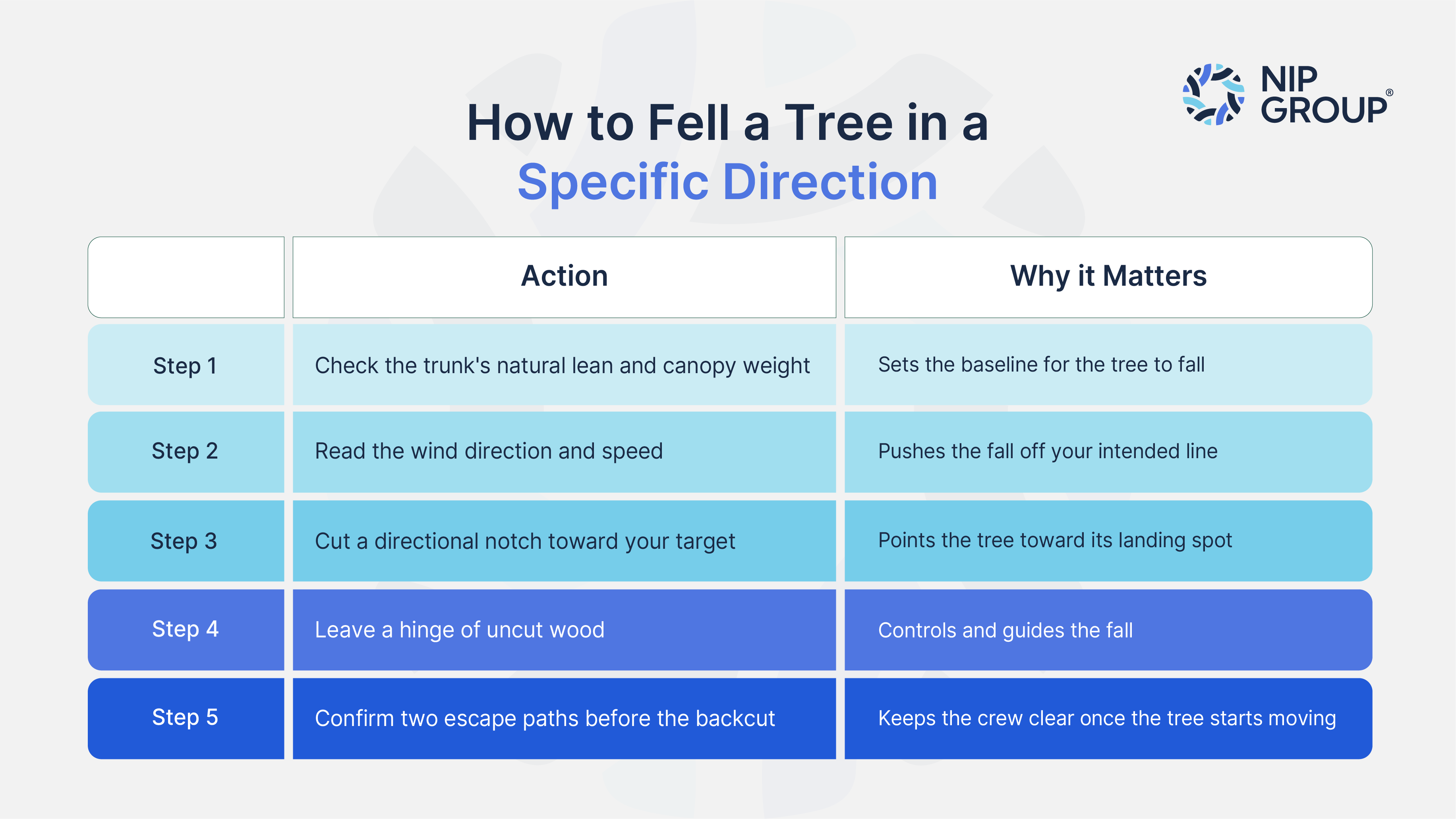
How to Fell a Tree in a Specific Direction
Dropping a tree where you intend takes more than a strong cut. It takes reading the tree correctly first.
- Check the natural lean of the trunk and the weight of the canopy
- Read the wind direction and speed before you start cutting
- Cut a directional notch that points toward your intended landing spot
- Leave a hinge of uncut wood to guide the fall and control the pivot
- Confirm two clear escape paths angled away from the fall line before the backcut
How to Fell a Tree in a Specific Direction
This is the best way to cut a tree down without leaving the outcome to chance.
What One Mistake Costs Beyond the Injury
A single bad felling decision rarely stays contained to the person holding the saw. A tree that lands wrong can strike a power line or damage a property, even when the crew wearing full PPE did everything right on their end. It is exactly why “never do this when cutting down a tree” applies to the aftermath as much as to the cut.
General business insurance was not built to carry that exposure. But tree service insurance exists specifically for the risks this trade creates. A policy built for this work responds to equipment damage and third-party property claims. It also responds to injuries that happen even when your crew followed every step correctly. Most standard business policies stop short of that, and that gap is what catches operators off guard when a claim lands.
Good Habits on Site Still Need the Right Policy Behind Them
Every mistake on this list is preventable with the right habits on site. However, none of them guarantee your business is protected once something goes wrong anyway. That is where TreePro comes in. It is a program built specifically for tree care companies, covering general liability, commercial auto, workers’ compensation, and the equipment your crew depends on every day.
TreePro is backed by A+ rated carriers, meaning those carriers hold a superior financial ability to pay claims when you need them to. Contact us to make sure your coverage matches the work your crew does every day. Or, ask your broker to sign you up for TreePro.
FAQs
1. What is the 5-15-90 rule tree felling?
It’s a safety guideline built from real accident data. Roughly 90% of felling injuries happen within 15 seconds of a tree starting to move and within 5 feet of the trunk. So never do this when cutting down a tree: stand inside that zone once the backcut is in and the tree starts to lean.
2. How to cut down a tall tree by yourself?
You’re not recommended to do this because tall trees need a second person for a reason: someone has to watch the canopy or the escape route while you’re focused on the cut itself. If you’re set on doing it, here’s the minimum:
- Confirm the lean, wind, and weight distribution before the first cut
- Clear two escape paths ahead of time
- Keep a phone and a way to call for help within reach
Even then, never do this when cutting down a tree without someone nearby who knows your plan.
3. How many branches can you cut off a tree without killing it?
Most arborists recommend removing no more than 25% of a tree’s live canopy in a single season. Go beyond that, and you risk stressing the tree enough to affect its long-term health, even if it survives the cut itself.
4. Is it legal to cut trees in the USA?
It depends entirely on where you’re working. Some cities require permits for trees above a certain size or on protected or heritage lists. So, always check local zoning or forestry rules before a removal job.