







In previous generations, humans looked at trees in a far different way than we do now. That’s not to say trees weren’t appreciated or valued for their beauty and ecological benefits, but in 2024, we know far more about them than our ancestors did.
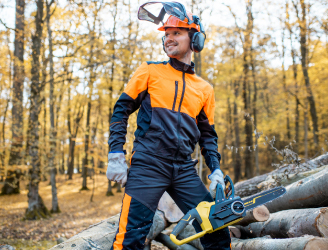
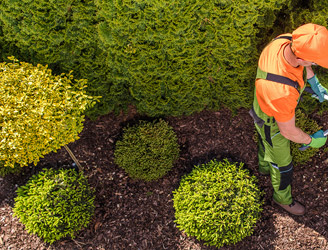
We know more about the life cycles of trees and what keeps them healthy. We know about the various environmental advantages trees have, and we know that trees shouldn’t just be cut down because they’re “in the way.” And with our expanded knowledge of trees and their individual traits and needs has come a revitalization of the arboriculture industry, also known more colloquially as tree care.
Tree care professionals are among the most in-demand workers in the United States. Urban population growth and a spike in construction (which are intrinsically linked) result in more work being done, and we’ve seen a rapid rise in building around trees, rather than eliminating them.
This has put tree care in a desirable position as we move forward and work toward a more sustainable future, particularly in construction. But these workers are performing critical work and often do their jobs in hazardous environments.
Tree care is important – but dangerous – work
Construction – both commercial and residential – hasn’t shown many signs of slowing down. It’s a $2 trillion industry in the United States with growth expected to reach nearly $3 trillion by 2027.
Shifts in the U.S. population have fueled that growth; 2023 was a net growth year for America and migration occurred at levels not seen since before the COVID-19 pandemic. And as more people move back toward urban centers, those population numbers become more dense and a need arises for more residential and commercial construction in order to accommodate.
Where you see construction happening, you’ll most likely see trees. And tree care has become an important part of the construction process, just as excavation and grading are. A better understanding of the environmental benefits of trees simply means they’re sticking around with buildings being erected around them and embracing the natural ecosystem – and we’re looking to tree care workers to help grow new trees and give longer, healthier lives to existing trees.
Risk, however, is inherent. Trees are often found around live power lines, generators, and other electrical hazards that must be carefully examined and prepared for before work even begins.
Critical risks faced by tree care workers operating near power lines or electrical hazards
High-density areas can shield power lines or electrical wires from view. Other power sources may be concealed underground or aren’t easy to see when surveying a site, which makes preparation the most essential part of tree care work.
Electrocution accidents are a leading cause of serious injury and death among arborists, according to the Occupational Safety and Health Administration (OSHA). One advantage that tree care workers have in 2024, compared to their predecessors, is access to advanced technology that makes site surveying far more detailed and precise. Drone technology can take high-resolution photos of a work site and help identify hazards as part of the pre-work planning process, which will invariably put workers in a safer environment.
Tree care contractor safety should be a top priority. OSHA advises all tree care companies to have a plan in place before anyone is cleared to work in the field. This plan includes:
- In-depth training for all workers that covers any potential hazard they may face while performing their job. This training should be conducted in their native language, or a language that is easiest for them to understand.
- Detailed and thorough site surveillance – utilizing all available technology – before putting workers on a job site.
- A comprehensive emergency plan, including preferred contacts, for all employees. This plan should include protocols in the event of an accident and who to contact if an employee is injured.
- Personal protective equipment (PPE) that includes properly insulated footwear, available to all employees who will be working on a job site.
Direct or indirect human contact with electrical sources
Tree care is manual labor, and workers are required to climb to sometimes dangerous heights to prune or remove trees. Because power lines can be hidden from view or in areas densely populated with trees, they present a serious risk for electrocution.
Falling tree limbs that come in contact with electricity
Utility line clearance electrocution risk can occur when falling limbs damage electrical lines or power sources on a job site. Even when working in pairs, workers are vulnerable to these hazards and should be prepared to know what areas of the job site present a potential problem.
Ladders or tools that are affected by an electrical source
Aluminum ladders or metal tools are also risks when working near electrical sources. Ladders, lifts and other tools can be conductive and pose a potentially fatal risk near electricity. Extreme caution and preparation are necessary when working in these hazardous environments.
Heavy machinery risks when near electrical lines
Tree care business liability isn’t limited solely to workers’ physical labor. Trucks and other utility vehicles can come in contact with, and dislodge, power lines that are near trees, homes or other objects nearby. Being careful and mindful of surroundings, particularly when operating this type of equipment, will help to mitigate risk and keep workers safe anywhere on the job site.
How to protect workers against electrocution with the right insurance from TreePro
Arboriculture is, by nature, a high-risk industry that requires high-risk contractors coverage.
Workers should be backed by the right coverage from a provider who understands every situation and every risk. TreePro is an industry-leading insurance solution that directly addresses the needs of all tree care businesses and employees and has been insuring clients with best-in-class coverage for more than 35 years. Tree service risk management has never been easier.
TreePro is the largest program of its kind and is rated “A+” by A.M. Best, which means you (the broker) and your insureds benefit from the program’s strength and stability. Coverage from TreePro, in conjunction with its UtilityPro program for high-risk contractors, gives businesses the security they need to focus on successfully growing and operating safely. UtilityPro, also a product available from NIP Group, covers pertinent tree care work like utility line clearing, power line transmission and distribution.
Want to learn more about TreePro and UtilityPro coverages, and gain a true competitive advantage in the insurance marketplace? Get in touch with NIP Group today.