







Summary:
- New vertical farm operators often spend on equipment before they know what matters most.
- Knowing which vertical farming equipment to buy first protects both your budget and your crop.
- This guide walks through what to prioritize now and what can safely wait.
Vertical farming is moving from experiment to industry fast. Fortune Business Insights, in an August 2026 update, valued the global market at $8.52 billion in 2025. It projects that the number will reach $70.89 billion by 2034. That works out to a growth rate of nearly 27% a year.
Growth like that pulls in new operators every month. It also raises the stakes on every equipment purchase you make. A crowded market rewards growers who scale with discipline. That discipline starts with knowing what vertical farming equipment to buy first.
This blog walks through that order, plus what can wait. It also covers how to protect the equipment once it is running.
Must Read: Vertical Farm Business Startup Guide: Essential Equipment, Costs, and Insurance
What Is Vertical Farming, and Why Does Buying Order Matter?
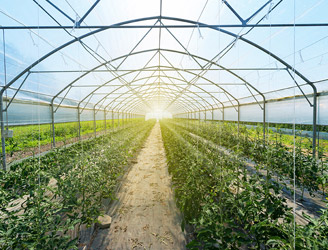
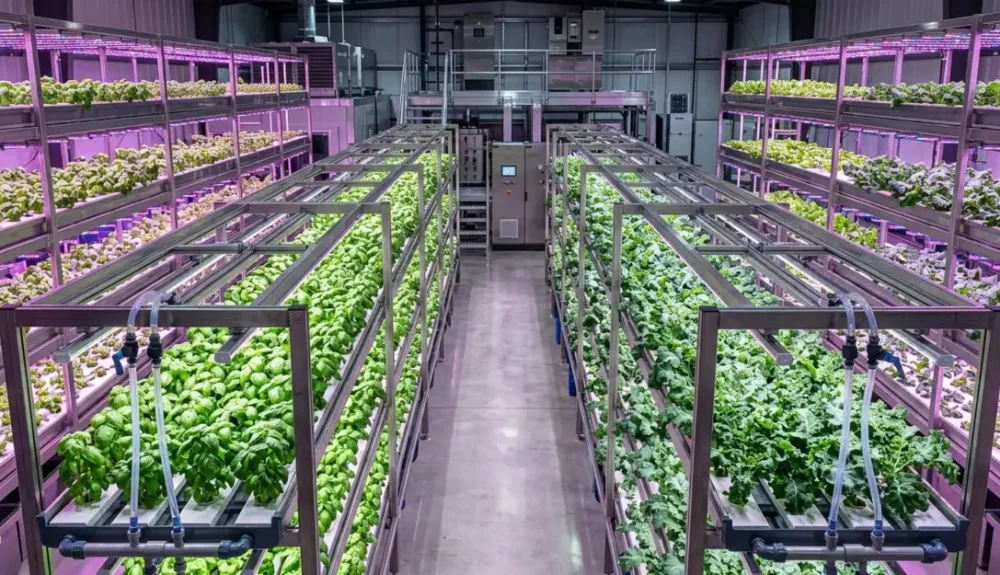
Vertical farming means growing crops in stacked layers, indoors, using hydroponic or aeroponic systems instead of open soil. Growers control light and temperature instead of depending on the weather. Water and nutrients stay within their control, too. That level of control is what makes the model work, and it depends almost entirely on equipment.
Equipment is usually the largest expense when starting a vertical farm, and that expense is only climbing. Grand View Research expects the U.S. market to reach $2.45 billion by 2030. That is up from $857.8 million in 2024. High upfront equipment costs are already the industry’s biggest barrier to entry. As more capital moves into the space, the cost of getting your setup wrong rises with it.
That is exactly why the buying order matters so much. Few new operators can afford every piece of equipment on day one. Skipping that order is how new operators run out of cash before their first harvest. A smarter approach separates what keeps plants alive from what makes operations easier. That way, your budget goes to the right place first.
Which Vertical Farming Equipment Should You Buy First?
Five categories of vertical farming equipment carry your crop through its first cycle. Get any one of them wrong, and the rest of your setup cannot compensate.
Lighting systems
Vertical farms get no natural sunlight, so full-spectrum LED fixtures are the light source. Seedlings need one light recipe, and fruiting plants need another. Your fixtures have to deliver both, plus everything in between.
Climate control
Stacked layers trap heat and humidity differently than open growing space does. HVAC and dehumidification units hold every shelf in that same target range. Skip this step, and the lower racks turn into a breeding ground for mold.
Irrigation and fertigation systems
Every rack needs the same water and nutrients, from the top shelf to the bottom one. Once you grow past a few shelves, watering by hand just cannot keep up. A built-in delivery system is what keeps every plant fed on schedule.
Racking and shelving
This is the structure that turns floor space into stacked growing space. Skip it, and there is no vertical farm, only a crowded room of plants on the ground.
Backup power systems
These keep climate control and lighting running through an outage. A single power failure during a growth cycle can cost you the entire batch.
These systems do not work in isolation. Lighting and climate control are especially tied together. Brighter fixtures throw off more heat, so your climate control system has to work harder to keep pace.
Once these systems are up and running, you have built the core of your indoor farming equipment. That equipment also becomes your biggest financial exposure. This is the point where it helps to know what greenhouse business insurance covers.
What Can Wait: Vertical Farming Supplies and Upgrades for Later
Every purchase doesn’t need to happen before your first harvest. Once your farm is running, a second layer of tools starts to earn its cost. These additions do not grow a single plant on their own. They make an already-running operation easier to manage.
Automation and robotics
Seeding and harvesting arms cut down on manual labor hours. They pay off once your labor costs outweigh the equipment cost, usually after your first full season.
Advanced sensors and IoT monitoring
These track nutrient levels and air quality without a technician on-site. They help you catch small problems before they turn into a lost growth cycle.
CO2 enrichment systems
These add supplemental carbon dioxide to boost plant growth rates. They make sense once you have baseline yield data to justify the investment.
Farm management software
These log yield data across every cycle you run. It also flags irregular patterns early, often before they show up in your harvest.
Post-harvest and packaging equipment
These lines handle washing and labeling for larger order volumes. This matters most once your production volume outgrows manual packing.
Must Read: Is Vertical Growing the Future of Florticulture?
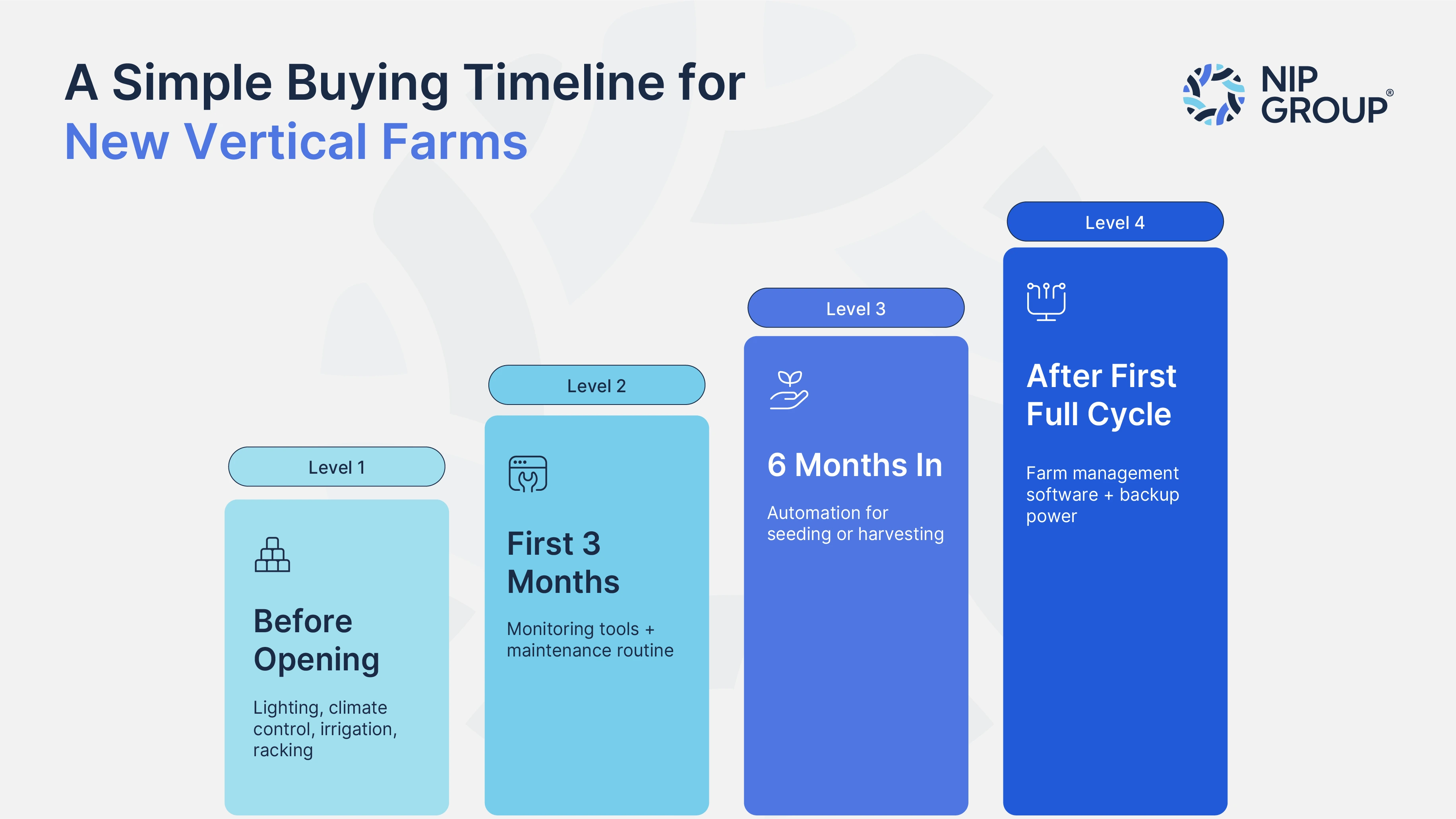
A Simple Buying Timeline for New Vertical Farms
A Simple Buying Timeline for New Vertical Farms
Spreading your purchases across the first year lowers the financial pressure of starting up. Each phase below builds on what you bought in the one before it. Skipping ahead usually means paying for equipment before you know if you need it.
- Before opening: Lighting, climate control, irrigation, and racking
- First three months: Basic monitoring tools and a documented maintenance routine
- Six months in: Automation for repetitive tasks like seeding or harvesting
- After your first full cycle: Farm management software and backup power systems
This order keeps your spending tied to your production needs. It also gives your broker a clear picture of your operation at each stage. That keeps the coverage conversation moving fast as your equipment list grows.
Why Equipment Choices and Coverage Decisions Move Together
Every piece of vertical farming equipment you add raises what you stand to lose. Your crop depends on those systems staying live around the clock. When a lighting or climate control unit fails, the cost goes beyond a repair bill.
That link between equipment and crop is exactly what your coverage needs to reflect.
- Equipment breakdown coverage responds when a mechanical or electrical failure takes a system offline
- Growing stock coverage protects the crop itself when a breakdown, power loss, or burst line destroys what was growing
- Pollution liability covers fertilizer runoff or chemical drift that reaches a neighboring property
- Umbrella liability adds a cushion above your other policies once a single claim outgrows them
One large loss should never exceed what your policies can pay out.
The Right Vertical Farming Equipment Needs the Right Coverage Behind It
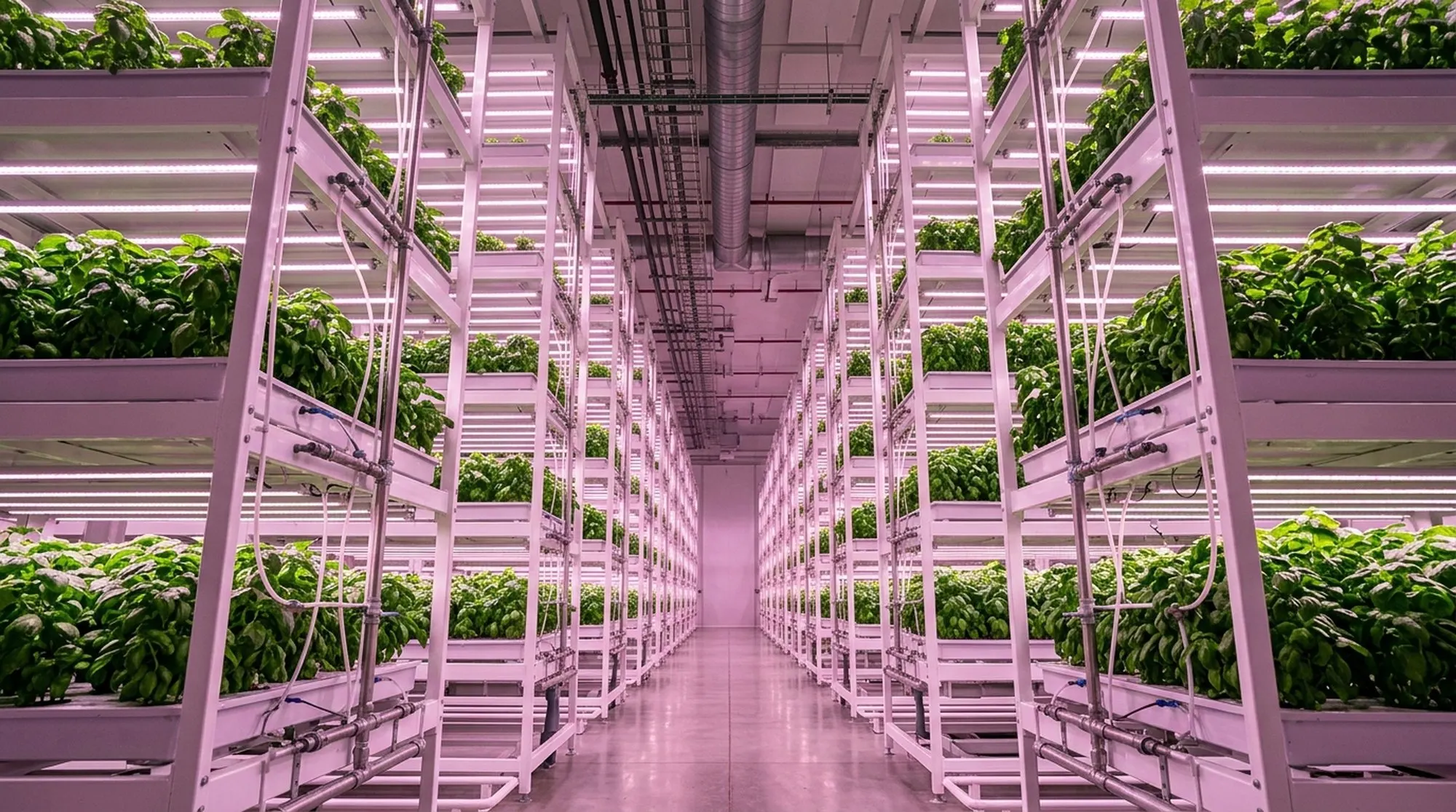
Buying the right vertical farming equipment in the right order protects your budget. Protecting that equipment once it is running protects your business. GrowPro is built for greenhouse and nursery operations, including indoor vertical farms.
The program also carries an A+ (Superior) rating from A.M. Best. That rating means the carrier has the financial strength to pay claims when they come in. The Hydroponic and Growing Stock Endorsements are already built into the program. You do not have to negotiate for coverage designed around your operation. So, ask your broker to sign you up for GrowPro or contact us today.
FAQs
1. Which crop is best for vertical farming?
The best crops for vertical farming are usually leafy greens and herbs.
- Lettuce and spinach: quick, reliable turnover
- Kale: hardier, higher yield
- Basil and other herbs: strong margins per square foot
Quick cycles like these let you turn your racks over more often, which matters most indoors.
2. Which crop gives the highest profit?
Microgreens and culinary herbs usually bring in the highest profit per square foot. They sell at a premium and are ready in one to three weeks. That fast turnaround is what pads your margins indoors.
3. Where can I buy vertical farming equipment?
You can buy the farming equipments from a few reliable sources:
- Specialty hydroponic and controlled-environment suppliers
- Regional greenhouse and nursery equipment dealers
- Manufacturers who sell direct for larger commercial orders
Ask other growers in your area for supplier recommendations before you commit.
4. Is vertical farming equipment expensive to maintain?
Vertical farming equipment costs less to maintain than most new operators expect, but it is not free. Lighting and HVAC systems need regular filter changes and bulb replacements. Irrigation lines need periodic checks for clogs or leaks. Budgeting a small monthly reserve keeps small issues from turning into major ones.