










Summary
- Right of way clearing delays can stall utility line projects and create real liability.
- A clear, staged process keeps crews safe and projects moving on schedule.
- This guide walks through each stage and the equipment involved, along with the risks to plan for.
U.S. utilities spend close to $7 billion every year clearing vegetation from their power lines, as per Fortune Business Insights. That spending covers thousands of miles of transmission and distribution corridors nationwide. It also reflects a grid that continues to expand as demand grows.
For utility contractors, that growth means a steady project pipeline. It also means utilities expect the work done to a strict standard. A cleared corridor is not optional before construction begins. It is tied directly to safety codes and reliability rules. Utility line projects stall the moment right-of-way clearing falls behind schedule.
This guide breaks down the process, helping contractors plan crews and equipment. It also addresses the coverage gaps that arise along the way.
Must Read: Vegetation Management Services Guide: Utility Contractors’ Insurance and Other Needs
Why Utilities Can’t Skip Right of Way Clearing
Trees growing into a power line do more than block a view. Contact between vegetation and an energized line can trip an outage or spark a fire. That is why the Federal Energy Regulatory Commission enforces a clearance standard called FAC-003-4.
It requires utilities to keep trees at a set distance from transmission lines year-round. The standard exists because of what happens when clearance slips. Tree contact with a line helped trigger the August 2003 blackout, cutting power to 50 million people across the Northeast U.S. and Canada.
Utilities have treated clearing as core reliability work ever since. Vegetation keeps growing back, so clearance stays a recurring job, often handled by dedicated right of way clearing services built for it. Skipping a cycle does not save money. It just pushes the risk further down the corridor.
How Right of Way Clearing Works, Stage by Stage
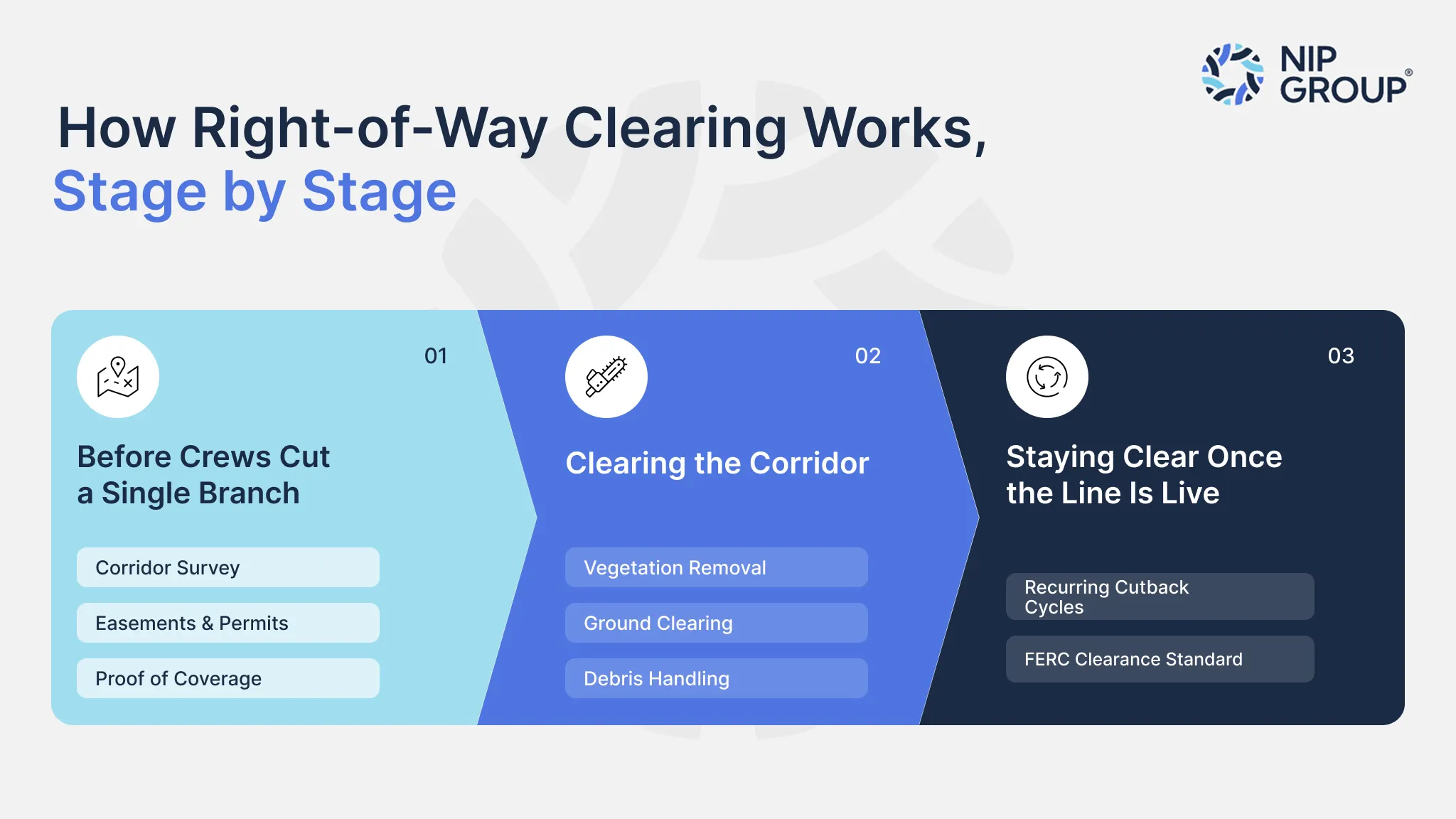
It happens in stages, each with its own risks and paperwork. Here is what that looks like on a typical utility line project.
How Right of way Clearing Works, Stage by Stage
Before Crews Cut a Single Branch
No crew touches a corridor before the groundwork is settled. This stage sets up everything that follows.
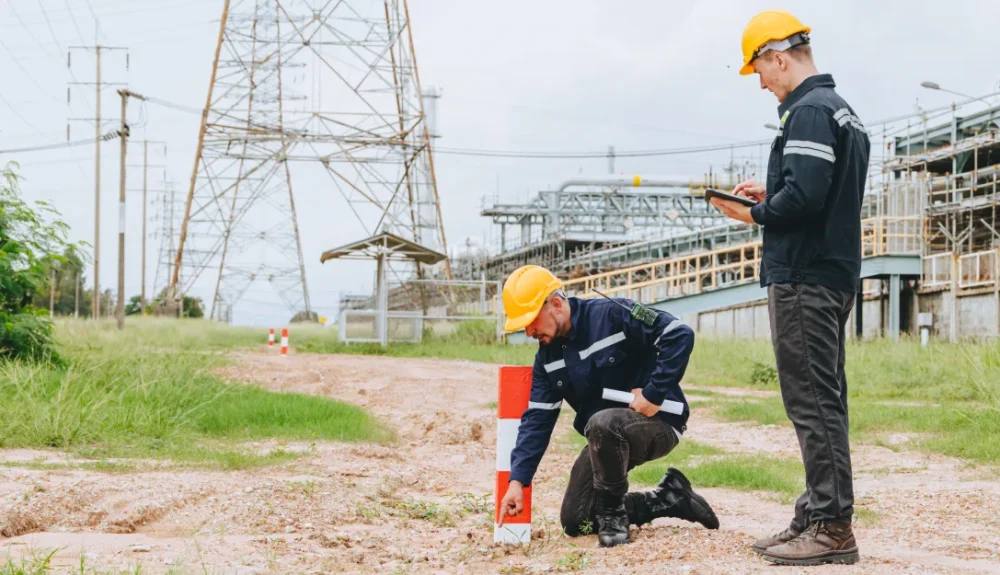
- Corridor survey: Engineers and land agents walk the route or review it by air. They flag vegetation growing too close to planned or existing lines.
- Easement and agreements: Utilities need signed agreements with landowners before work begins. The Federal Highway Administration treats this coordination as a formal, documented process.
- Permits and landowner notification: Local permits and notices need to be cleared before crews mobilize. Utility approval has to come through first.
- Proof of coverage: Most utilities will not sign off without proof of active utility contractor insurance. That paperwork protects the utility and the crew doing the clearing.
Skipping any of these steps can delay a project by weeks. It can also leave a contractor exposed if a dispute surfaces later.
Clearing the Corridor
Once the paperwork clears, crews move onto the corridor itself. This stage is where the physical work of clearing happens.
- Vegetation and tree removal: Crews cut trees and brush along the marked corridor. The goal is hitting the clearance distance the project calls for.
- Ground clearing for construction: On new builds, crews also grade access roads. They prepare the ground for poles or towers before construction starts.
- Debris handling: Cut material is chipped, hauled, or disposed of in accordance with local rules.
- Working near energized lines: Some lines stay live through the entire job. That proximity is where much of the physical risk sits.
Timing matters as much as technique here. Utilities often schedule clearing around weather windows and permit deadlines. A delay at this stage pushes the entire construction timeline back.
Must Read: Utility Arborist Fall Safety: Working at Heights
Staying Clear Once the Line Is Live
The clearing does not end when construction wraps. Vegetation keeps growing back, and utilities have to stay ahead of it.
- Recurring cutback cycles: Utilities schedule repeat clearing on a set cycle, timed to how fast vegetation regrows in that region.
- Regulatory clearance standard: FERC’s FAC-003-4 standard requires clearance between trees and transmission lines to be maintained at all times, not only after construction.
- Ongoing contract work: This cycle is why maintenance work makes up a steady share of right of way clearing contracts. It runs alongside new construction, year after year.
Right of Way Clearing Equipment Contractors Rely On
Corridor conditions decide what gear a crew brings. A tight residential corridor calls for different tools than an open rural stretch. The equipment has to match the vegetation density on site. It also has to account for distance from live lines. Here is what most crews rely on, and why it matters:
- Brush mowers and mulchers: These chew through thick, low growth fast, clearing wide stretches of the corridor in one pass.
- Chainsaws and pole saws: Crews reach for these near poles and guy wires, where a mower just cannot fit.
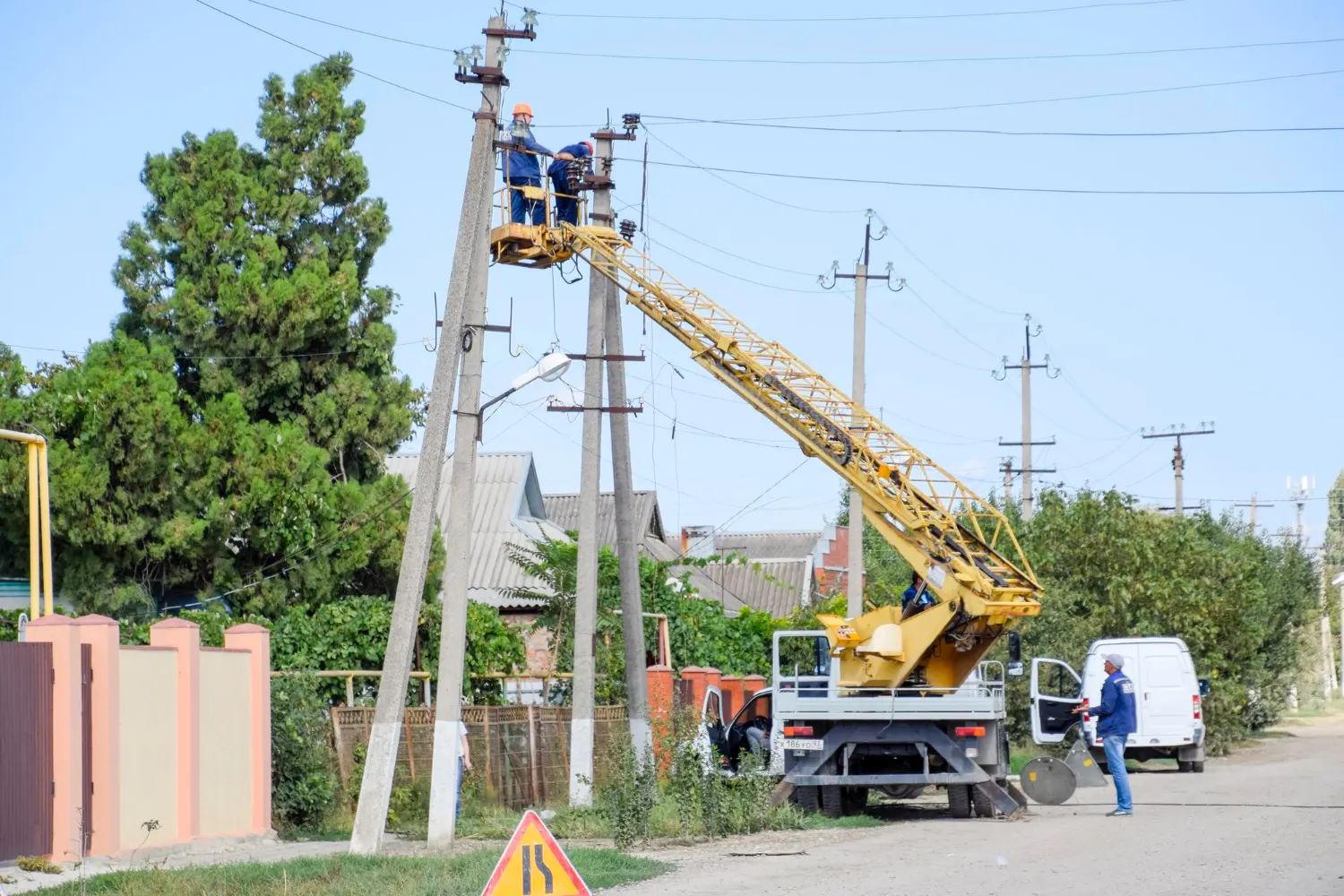
- Bucket trucks and aerial lifts: These get crews up to height near live lines without anyone climbing.
- Chippers: These turn cut brush into mulch right on site, so crews are not hauling loose branches off the corridor.
- Stump grinders: Clear root systems below grade before trenching or pole work begins.
Matching equipment to terrain and vegetation type keeps the job moving. It also keeps crews further from unnecessary risk. Heavier machinery means higher replacement costs if it breaks down mid-project. Getting the clearing right protects the schedule and the crew doing the work.
What Can Go Wrong on a Right of Way Clearing Job
A well-planned clearing job might also carry real hazards. Crews work close to structures, buried lines, or sometimes energized wires. A few risks show up more often than the rest.
- Contact with energized lines: A dropped limb or a misjudged cut can strike a live wire. Crews working near active transmission lines face this risk on nearly every job.
- Underground utility strikes: Grading and stump removal can hit buried gas lines or water mains. An 811 locate request helps, but old or missing records can still leave lines unmarked.
- Wildfire ignition: Equipment sparks or unmanaged debris piles can ignite dry brush fast. This risk climbs sharply in drought-prone regions during clearing season.
- Landowner disputes: A property owner may push back on how much vegetation was cleared. Without before-and-after photos, that disagreement can turn into a formal claim.
- Worker injury: Falls, chainsaw accidents, and equipment mishaps stay common across every stage of the job. Ground crews and climbers both carry this exposure.
These risks do not show up one at a time. A single job can involve buried lines, dry vegetation, or an unhappy landowner all at once. That is why right of way clearing contractors need coverage built around how the work happens. General liability responds to some of this, but not all of it. Wildfire ignition and pollution from fuel or chemical spills often fall outside a standard policy.
UtilityPro is built specifically for utility contractors doing clearing and vegetation management work. It covers general liability and workers’ compensation, along with commercial auto. It also includes wildfire liability protection and contractors’ pollution liability, both built around the exposures this work actually creates. The carrier behind UtilityPro holds an A+ rating from A.M. Best. That rating means the carrier has a superior financial ability to pay claims when they come in. Ask your broker to sign you up for UtilityPro. Or, contact us to ensure your coverage matches the risk for your next right of way job.
FAQs
1. Who is responsible for clearing on a power line project?
The utility company holds ultimate responsibility for keeping its corridors clear, since reliability standards apply to them directly. In practice, most utilities contract this work out to specialized clearing contractors. They handle the cutting, hauling, or documentation on their behalf.
2. How wide does a right-of-way need to be for utility lines?
There is no single national width requirement for utility right-of-ways. Utilities set clearance distances based on:
- Line voltage and sag potential
- Local vegetation growth rates
- Terrain and access needs
- State and regional safety codes
Higher-voltage transmission corridors typically need wider clearance than smaller distribution lines running through neighborhoods.
3. Can a utility company clear trees on private property without permission?
Yes, within the boundaries of an existing easement. Most utilities already hold a right-of-way easement tied to the property deed, granted when the line was originally built. That easement lets the utility trim or clear vegetation inside its boundary without asking each time again. Work outside the easement line still needs separate landowner permission.
4. How often does clearing need to be done?
Most utilities schedule right of way clearing every two to five years. The exact cycle depends on region and vegetation type. Fast-growing vegetation in warmer climates often needs more frequent attention. Slower-growing corridors in drier regions can go longer between cycles.