





Summary
- When your crew damages a client’s property, the client expects your business to pay.
- Property damage liability covers those repair bills and your legal costs, up to your limit.
- This blog shows which claims fall outside this coverage and how to choose your limit.
November marks the start of snow and ice removal work for many landscaping companies. Your crews will soon be clearing driveways and parking lots for your clients. This is when fresh snow can hide curbs, and drivers may misjudge the space around parked cars. So, one wrong pass with a plow blade can damage property your business does not own.
If that happens, the property owner will expect you to cover the repair. For most landscaping businesses, a bill like that is hard to absorb. IBISWorld’s May 2026 industry report shows that the average landscaping company keeps about 7.9% of its revenue as profit. At that rate, you would need about $125,000 in work just to earn back one $10,000 repair.
This is where property damage liability comes in, but it still doesn’t cover every claim your business might face. In this blog, we explain what this coverage covers and where it ends. We also show you how to set limits that match the contracts you sign.
Must Read: What to Include in Every Landscaping Contract: Scope, Payment Terms, and Liability Clauses
What Is Property Damage Liability Insurance for Landscapers?
Property damage liability insurance is coverage that pays when your work accidentally damages someone else’s property. For most landscapers, it comes as part of a commercial general liability policy and usually pays for:
- Repair or replacement costs: If a crew member backs a mower into a client’s garage door, the policy pays to fix it.
- Legal defense: If the owner sues you over the damage, it covers your legal costs and any settlement up to your limit.
Your policy can also list this protection under bodily injury & property damage liability. The two parts work side by side:
- Bodily injury: This part pays when someone outside your business gets hurt because of your work.
- Property damage: This pays when someone else’s property gets damaged during or after your job.
Most policies use one shared limit for both parts, called the per-occurrence limit. This is the most the policy will pay for a single incident. If one accident injures a passerby and damages a parked car, both claims come out of that same limit. Any cost above it comes out of your own pocket unless you carry an umbrella policy.
What Does Property Damage Liability Cover on a Landscaping Job?
Property damage liability responds to accidental damage while your crew is working and after the job is finished. It also reaches past your client’s lot, and most claims fall into these four situations:
1. Damage to Client Property During the Job
Most claims happen on the client’s property while your crew is still on site. A rock thrown from a mower can break a back window or chip a client’s vinyl siding.
In the fall, blowing out a sprinkler system with too much air pressure can crack its lines and heads. Your crew might also hit a buried cable or gas line while putting in new edging. In each case, your policy pays for the repairs up to your coverage limit.
2. Damage to Neighbors and Public Property
Your coverage also follows your work past the client’s property line. A string trimmer can kick a stone into a neighbor’s car parked at the curb, or a limb dropped during pruning can land on the fence next door. Those owners will expect your business to pay for the repairs. That is why any landscaping business insurance program you buy should include strong third-party protection.
3. Snow and Ice Removal Damage
Damage from snow and ice removal is covered, but the machine involved decides which policy pays for it. A plow blade can tear up turf along a driveway or crack a curb buried under fresh snow. Piles pushed too close to a building can crush shrubs or bend a light pole.
When the damage comes from a plow mounted on your truck, your commercial auto policy usually pays. When it comes from a skid steer or a snow blower, your general liability policy steps in. Every policy is written a little differently, so ask your broker to confirm this before the first storm.
Must Read: Landscaping Cost Breakdown: A Step-by-Step Pricing Guide for Contractors
4. Damage That Shows Up After the Job Is Done
Completed operations coverage handles damage that shows up after you finish a job. It is part of most general liability policies, and it protects you after your crew leaves the site.
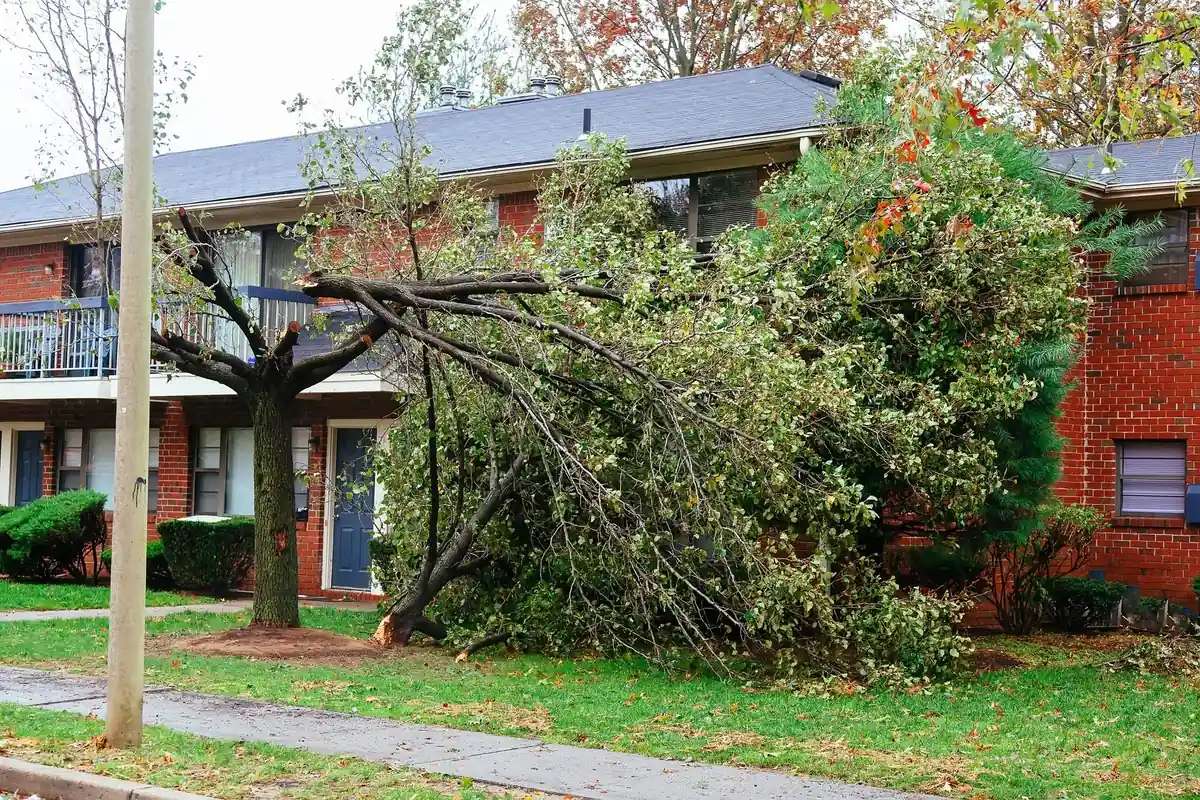
For example, a retaining wall you built might lean months later and push soil into a neighbor’s yard. Or, a drainage job might send water toward a client’s foundation after the first heavy rain. Some policies limit or exclude this coverage for certain jobs, such as retaining walls above a set height. If you build walls or handle drainage, ask your broker whether your policy covers that work after it is finished.
What Isn’t Covered by Property Damage Liability?
Property damage liability does not cover your own property or the cost of redoing your own work, and these are the cases landscapers see most.
- Damage to your own property: If your mower breaks or your trailer gets stolen, the policy won’t pay for it.
- Damage caused by your vehicles: Most policies exclude damage from trucks you own or drive for work. So if your truck backs into a client’s gate, this coverage won’t respond. Damage from a truck-mounted plow usually falls under the same exclusion.
- Pesticide and herbicide drift: Most policies treat these chemicals as pollution and leave them out. That means spray that drifts onto a neighbor’s shrubs usually isn’t covered.
- Redoing your own work: Say a patio you installed starts to sink. The policy won’t pay to tear it out and rebuild it, because fixing your own work is a business cost.
- Property in your care: Rented equipment or patio furniture you move for a client may be excluded. Once something is in your control, the policy often treats it as your responsibility.
- Damage your crew causes on purpose: If a worker drives over a flower bed to save time, the claim can be denied. The policy only pays for true accidents.
You’ll find these exclusions listed in your policy. Read them before your next contract, so a client dispute doesn’t become your bill.
How Can You Keep Property Damage Claims From Growing?
The best way to keep property damage claims small is to prepare before your crew starts work. A few simple habits help you avoid damage in the first place:
- Call 811 before you dig: Make the free call before every digging job, as state law requires. Wait for the utility companies to mark their buried lines, then dig only in the clear areas.
- Walk snow sites before the first storm: Mark curbs and fire hydrants with tall poles while you can still see them. Then walk your plow drivers through the lot, so they know where to steer clear once snow covers it.
- Flag what the grass hides: Put bright flags on sprinkler heads and valve boxes before your crew mows or aerates. Five minutes of flagging costs far less than replacing a row of broken heads.
- Photograph every job site: Snap dated photos when your crew arrives and again before you leave. If a client later blames you for an old crack, your photos settle it fast.
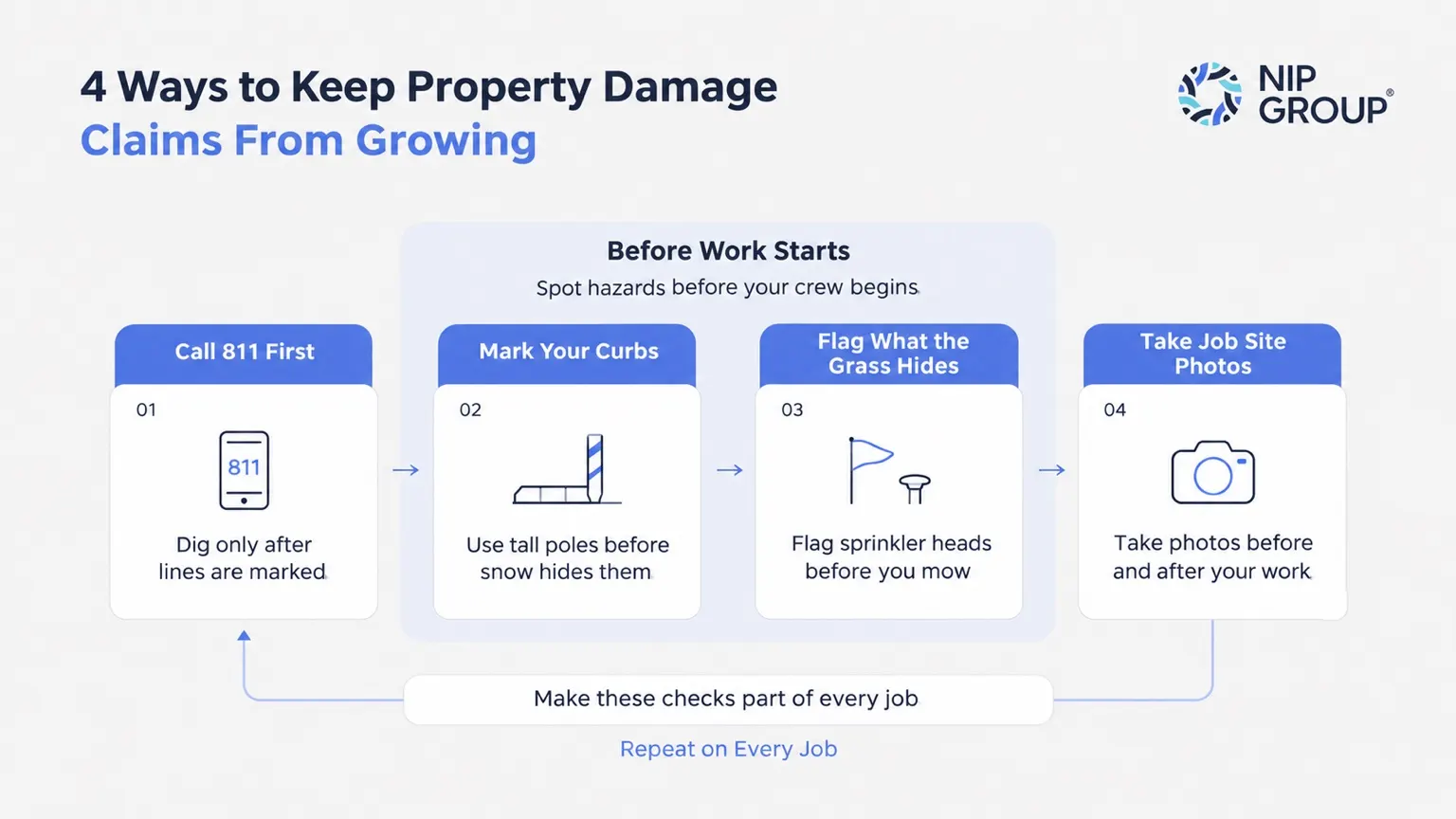
4 Ways to Keep Property Damage Claims From Growing
Get Property Damage Liability That Covers Every Season
Get year-round property damage liability by combining your general liability with the other policies your landscaping work needs.
LandPro is one such program that pairs general liability with commercial auto, inland marine, umbrella, and contractors pollution liability. With these policies working together, a plow truck claim or a drift complaint has a policy ready to respond. You can also add workers’ compensation, property, crime, and cyber coverage to the same program.
Behind all of this is an insurance company rated A+ (Superior) by A.M. Best. That rating means it has a superior financial ability to pay claims when they come in. Ask your broker to sign you up for LandPro or, contact us to see where your coverage stands before the first snowfall.
FAQs
1. What is the minimum coverage that you must have for property damage liability?
There is no national minimum for property damage liability. Instead, your required amount is set by:
- State licensing: Some states need a set amount of coverage to license landscapers.
- Client contracts: Commercial clients often list their own minimum.
- State auto laws: Most states set a property damage minimum for work trucks.
2. Do I need both general liability and professional liability?
You may need both if your business offers design work. General liability covers damage your crew causes on the job. Professional liability covers mistakes in your plans, like a grading plan that floods a client’s yard. If you only mow lawns, general liability may be enough.
3. How is property damage calculated?
Property damage is usually calculated as the cost to repair what was damaged. If it cannot be fixed, the claim uses its value just before the damage. The total can also include loss of use, like a store that closes while its parking lot is repaired.
4. What’s the difference between property damage and physical damage?
Property damage means harm you cause to someone else’s property. Physical damage means harm to your own vehicle. Both show up on commercial auto policies:
- Property damage liability pays when your truck hits a client’s fence.
- Physical damage coverage pays to fix your own truck after a crash.