











If you have a year-round greenhouse and nursery, you’re in luck when February rolls around— that is, if you play your cards right. Valentine’s Day-themed flowers are in huge demand around this time: anything pink, red, or white is all the rage. While you can leave room to cater to unconventional tastes with other colors and varieties, roses are always a safe bet, and the demand astronomical (and very profitable).
Getting your greenhouse and nursery prepared for Valentine’s Day and capitalizing on the holiday— during one of the most lucrative times of the year—requires a lot of forethought and planning. But it’s more than doable with the right approaches and knowledge. Growers just plugging into the holiday market have a lot to wrap their head around for catering to the most romantic day of the year and a flurry of flower orders. To gear yourself up for Valentine’s Day, here are some important tips.
Swap inventory – grow the right stuff
Some buyers may have broader tastes for Valentine’s Day, but successful flower production for the holiday does have a niche aspect. Heading into the season, swapping out certain colors in favor for others is smart: especially whites, pinks, reds, and even purples in some cases.
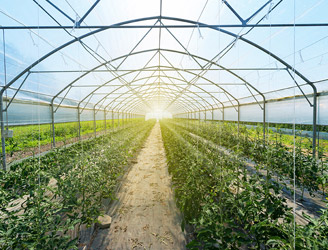
If you really want to cash in on Valentine’s Day, you’ll want to grow roses. For roses to bloom right on time for the holiday will require the perfect temperatures to do so. Whether you already have a heating system, or you’re considering one to upgrade your business, be sure to have that dialed in and install the best (and safest) heating unit for your greenhouse (if your greenhouse currently does not have that capability). It can be a huge struggle to grow cut flowers, annuals, and even some perennials (like roses) in unheated structures such as high tunnels or hoop houses, though some very experienced growers will claim it’s not completely impossible.
Other popular flower varieties that are most sought out (and well known for their Valentine’s hues) include tulips and bleeding hearts, too. Snapdragons, sweet peas, lilies, chrysanthemums, and hydrangeas— especially with carefully chosen varieties that bloom in the holiday’s trademark colors— are choice varieties too. If you grow poinsettias for Christmas, you can make an easy swap of inventory simply growing poinsettia varieties with pink and white colors in addition to red, though poinsettias for Valentine’s might not be in the highest demand. For revenue’s sake, this can save you a lot of money with shipping and orders, if you have the ability to turn around Christmas-oriented plants and sales to transition seamlessly into the Valentine’s Day season.
Some of the most popular and lucrative Valentine’s Day flowers include:
- Roses (red, pink, or white)
- Bleeding hearts
- Tulips
- Carnations
- Freesia
- Lilies
- Orchids
- Daffodils
- Buttercups
- Alstroemeria
- Snapdragons
- Sweet peas
- Chrysanthemums and Mums
- Hyacinth
However, don’t get too caught up with variety, or even color. People (whether walk-in customers, stores, florists, or others) are more likely to lean towards color in favor of variety— and even then, there’s no need to turn your entire greenhouse upside down and have only Valentine’s Day colors available. Some people may seek colors and styles of a different flavor, but as a general rule of thumb it’s wise to have a great amount of the classics.
Order on time (and well ahead of time) from other greenhouse growers
Greenhouse growers can bypass their own flower production, of course, and instead buy and resell ready-for-sale Valentine’s flowers. This can save a lot of work, money, and transition from one market to another— especially during a season where the markets for flowers change rapidly from poinsettias for Christmas, to New Year’s arrangements, and then to Valentine’s day, each with different niches.
The key to a successfully prepared and profitable greenhouse nursery for Valentine’s day, in this case, is ordering these varieties from other greenhouses and nurseries right on time. It’s even better if you do your research ahead of time to make sure you order all desired inventory at once to save on shipping and delivery costs. This can be helpful for your revenues, too.
Look into the trends for the current year well in advance of Valentine’s: what flowers are popular lately, in general? What is most likely to sell? While the holiday’s “theme” remains similar from year to year, you won’t want to catch wind of a new trend and put in a whole separate order too late— which could also be much too late for the market and add to your overhead shipping costs.
Don’t just time the orders – time the blooms
It’s also important to keep in mind that good Valentine’s Day revenue all banks on when these flowers are expected to bloom— and having them bloom right on time for holiday purchase. Otherwise, flowers will have a much harder time selling, and revenue will be lost, particularly if buyers favor another greenhouse or nursery’s product readiness over yours.
Again, this requires the best timing for orders and some good coordination, especially if you are dealing with the purchase of many different varieties that bloom at different times. And if you do happen to be ordering several different types of Valentine’s Day flowers, this might even go against the wisdom of putting in a single order to save money—you’ll have to put in multiple, no matter what.
Do some planning: “group” your flower orders in terms of the time they take to bloom, with the longest to bloom purchased farther in advance if need be, and the shortest to bloom closer to when Valentine’s Day sales are to be expected. Try to categorize and streamline orders as much as possible to save on overhead and shipping costs, and do fewest orders as possible. Plan ahead of time. If you can work with another greenhouse that has many different varieties available, all started at different times yet geared to all bloom at the same time on Valentine’s Day, even better.
Not sure where to start with insuring your greenhouse structures? Read this blog now!
Tips for if you’re growing your own
If you do have a high-tech greenhouse with many capabilities, you can order plants as early as the winter months (such as January). But you can also even start them yourself from very small plants or seedlings as well, and nurture them each in such a way that they will be in full, glorious bloom right in time for Valentine’s Day.
If you’re taking up the task of growing your own Valentine’s Day flowers from the very get go, here are some tips for great blooms, and thus great revenue and sales:
Up the flower foods
Tweaking plant feedings can help greenhouse growers prepare for Valentine’s Day and help time the blooming right, whether you order resale plants or cultivate your own. If starting from scratch, extra calcium, phosphorus, potassium, boron, and other micronutrients added to media can ensure strong, healthy, and beautiful blooms— whether mixed into the media from the start, or given as side-dressing or foliar feed later.
Prune perennials
Growing great blossoms and maximizing revenue from classic perennials (especially roses, the most popular Valentine’s Day flower) doesn’t just hinge on the right flower food: it also depends on judicious pruning. This is especially the case for roses, the top seller for the holiday market. To get the best blooms and make great sales, learn the best techniques for pruning from variety to variety. Clipping smaller buds in favor for larger, more central ones is a basic rule of thumb for any flower nursery; but still, pruning needs to be just as well-timed as feedings so you don’t miss the mark.
Sure, some plants may put out tons of flowers. However, this isn’t always desirable or necessarily lucrative. Excessive flowering runs the risk of many low-quality blossoms compared to a lower quantity of higher quality, beautiful, and eye-catching flowers that are much more likely to sell.
Tweak the lighting
One infrastructural trick to great blooms is changing or modifying your lighting system. If you don’t have greenhouse lighting set up in your greenhouse for the holiday (and especially if you plan to grow your cultivars in cold low-light climates leading up to Valentine’s), it’s definitely recommended you install one or modify the setup you already have for the best results.
Just like feeding and pruning, flowering plants and shrubs respond well to certain portions of the light spectrum— and using this as a tool can be well-timed. All three combined can ensure big, beautiful, desirable blooms in time for Valentine’s. Focus on lighting that favors the infrared side of the light spectrum: red light encourages floral growth over vegetative, though it’s important blue light is included, too.
Know your markets: leverage the right contracts
Once you have a great product for Valentine’s Day, the next step is selling your great product for Valentine’s Day. How do greenhouses and nurseries get the most success during this time? Where are the best markets? How do you land the most lucrative contracts on this busy floral holiday?
The biggest market for greenhouses and nurseries to get revenue during Valentine’s Day is to connect with florists. Obviously, cut flowers for arrangements and bouquets will be of highest demand more than consumers buying simple uniform potted or container plants for the holiday (save, perhaps, poinsettias). Greenhouse growers and nurseries should have this in mind when they grow or buy. Make sure that the flower crops you start from seed, as well as the plants you’re purchasing for resale, are geared for floral arrangements and cut flower sales (opting for long stem roses instead of other varieties, for example).
Unless you plan to hire your own in-house florist for your greenhouse business or nursery (which some businesses do to increase their chances of sales for arrangements, especially in greenhouses open to the public), florists elsewhere— even if they grow their own for arrangements— are the top prospects to approach. And while small floral businesses can be great markets, you may find that the highest demand for Valentine’s Day flowers comes from floral arrangements in food stores, grocery stores, and other major mainstream markets, which are sure to be businesses that do not grow their own. These are the best figures to approach.
Hot tip: if you’re just breaking into the Valentine’s Day market, time your orders and blooms to be ready a little earlier on average. You’ll want hard evidence of the quality of your product, namely through samples you can give to prospective businesses and contracts. You’ll also need to take into account quality while shipping: make sure that if you are shipping your product that it is packed in a way to maintain optimal temperature, so the product does not go bad on arrival!
Don’t have available florist contracts in your area? Approach other greenhouse growers and nurseries that may already be connected to and fulfilling to the demand for Valentine’s Day in your city or region. If the demand is huge enough, they may favor outsourcing the production of some of their flowers, especially if the market is growing and they only have so much they can produce.
By timing orders well, lowering shipping costs, finding target markets, and choosing the best and most popular flowers, your greenhouse or nursery can produce exceptional flowers for Valentine’s Day while tapping into the amazing revenue that can be had during this busy romantic holiday. While it can take a lot of foresight and strategy at first, it’s well worth it being the most high-demand holiday for flowers all year— and bring a lot of income and revenue to your greenhouse or nursery business.
Need a greenhouse insurance solution that you can rely? Learn more about GrowPro today!

