








Summary
- Most irrigation quotes cover pipes and emitters but leave out upkeep and repair costs.
- Planning your greenhouse irrigation system budget around these costs helps you avoid surprise bills.
- This blog compares irrigation types and their costs, then shows how to protect your system.
If you are pricing a new irrigation setup, you are buying into a fast-growing market. According to Grand View Research’s April 2026 report, the global greenhouse irrigation system market is worth $2.6 billion in 2026. The same report expects that figure to double by 2033.
A big reason for that growth is that growers are adding moisture sensors and automatic timers to their setups. So, if you’re shopping for commercial greenhouse irrigation systems, expect higher quotes and more parts to look after. Your crops also lean on that one system, so one failure can stop water across every bench.
Your greenhouse irrigation system budget, therefore, must plan for upkeep and breakdowns, beyond tubing and emitters. In this blog, we compare the main system types and what each one costs. We then explain how to maintain your system and protect your investment.
Must Read: Greenhouse Technology in 2026: What’s New and What It Means for Your Coverage
Which Irrigation Method Is Best for a Greenhouse?
For most greenhouse crops grown in pots or rows, drip is the best choice. It sends water straight to the roots, so less water goes to waste and leaves stay dry. That said, no single greenhouse irrigation system works for every grower. When you choose which irrigation method is best for greenhouse crops, start with what you grow. The table below shows how the five most common options compare.
| Method | How It Works | Best For | Budget Note |
| Drip | A greenhouse drip irrigation system waters each plant through small tubes. | Potted plants and vegetable rows | Needs filters to stop tubes from clogging |
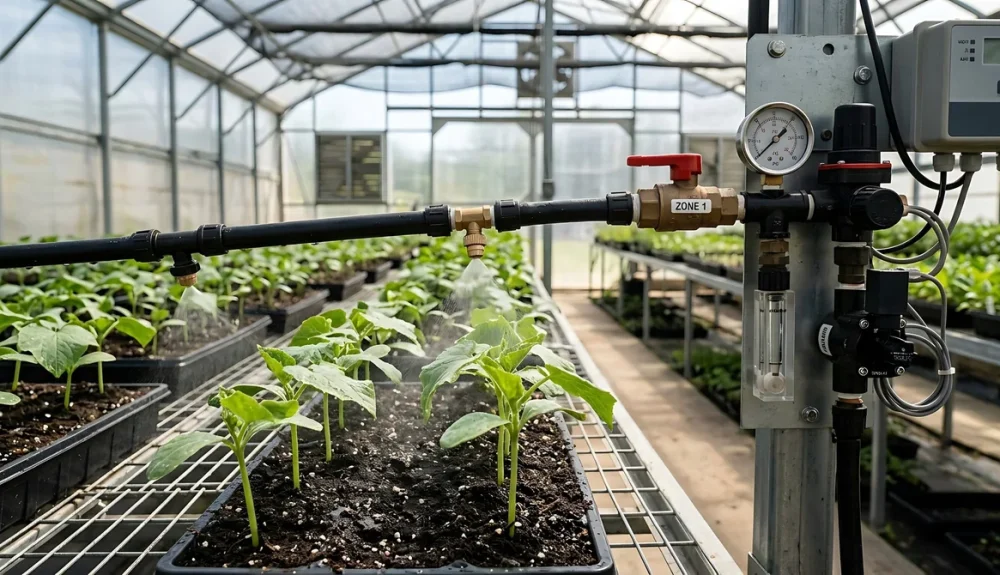
| Misting | Small nozzles spray a fine mist over the plants. | Seedlings and young plants | Uses more water than drip |
| Boom | A moving arm waters the benches from above. | Large numbers of trays in neat rows | Costs more to install |
| Flood benches | Benches fill with water, then drain into a tank. | Potted plants that drink from the bottom | Reuses water, but the benches cost more |
| Hydroponics | Plants grow in water mixed with nutrients. | Lettuce, greens, and herbs | Saves water, but crops suffer fast if a pump stops |
What Goes Into the Cost of a Greenhouse Irrigation System?
The cost of your greenhouse irrigation system comes from six main parts, plus the labor to put them in. Emitters can take a large share of the bill, since each pot or plant often gets its own. Because every part below costs real money, include them all when you review greenhouse business insurance:
- Fertilizer mixer for your lines: The price for this depends on how it mixes fertilizer into your water. Water-powered models with one fixed rate will cost the least, while electric models that adjust the mix will cost more.
- A pump sized to your greenhouse: Pumps are priced by horsepower, or how hard they push water. So, a small house can run on a basic pump, but long lines need a stronger one.
- Filters that match your water: Your water source also decides the filter. City water usually needs only a low-cost screen filter. Well or pond water, on the other hand, carries more grit, so it needs a pricier disc or sand filter.
- Pipes and drip tubing: You pay for pipe and tubing by the foot or by the roll. A bigger greenhouse with more benches needs more of both, which raises this cost.
- Clean-water safety valve: This valve stops fertilized water from flowing back into the clean water you draw from. You buy it once, and many towns require it after you add fertilizer to your lines. Some towns also charge a small yearly fee to inspect it.
- Watering timers and moisture sensors: A watering timer switches on and off for each zone, or group of benches watered together. Timers that handle more zones, therefore, cost more, and every zone also needs its own valve. Plus, moisture sensors are priced per sensor, so your cost grows with each bench you track.
Must Read: Top Risk Control Strategies for Greenhouses and Horticulture Businesses
How to Set Up a Greenhouse Drip Irrigation System Without Budget Surprises?
To avoid budget surprises, start by planning around your water before buying hardware. Many growers looking up how to set up a greenhouse drip irrigation system start by pricing tubing and emitters. If their water later clogs those emitters, they have to buy replacements. Following these steps in order helps you buy each part once.
- Test your water first: A lab test shows which minerals and particles will clog your emitters. That keeps you from buying the wrong filter.
- Group plants by water needs: Put crops with similar water needs on one valve. You won’t need extra valves later to fix uneven watering.
- Match filters and pressure to your water: Pick filters based on your test results, and then add pressure regulators so each plant gets the same flow.
- Test and record before planting: Run each zone and write down its flow rate because a lower reading later points to a clog or leak. This record also shows your insurance company the system worked at installation.
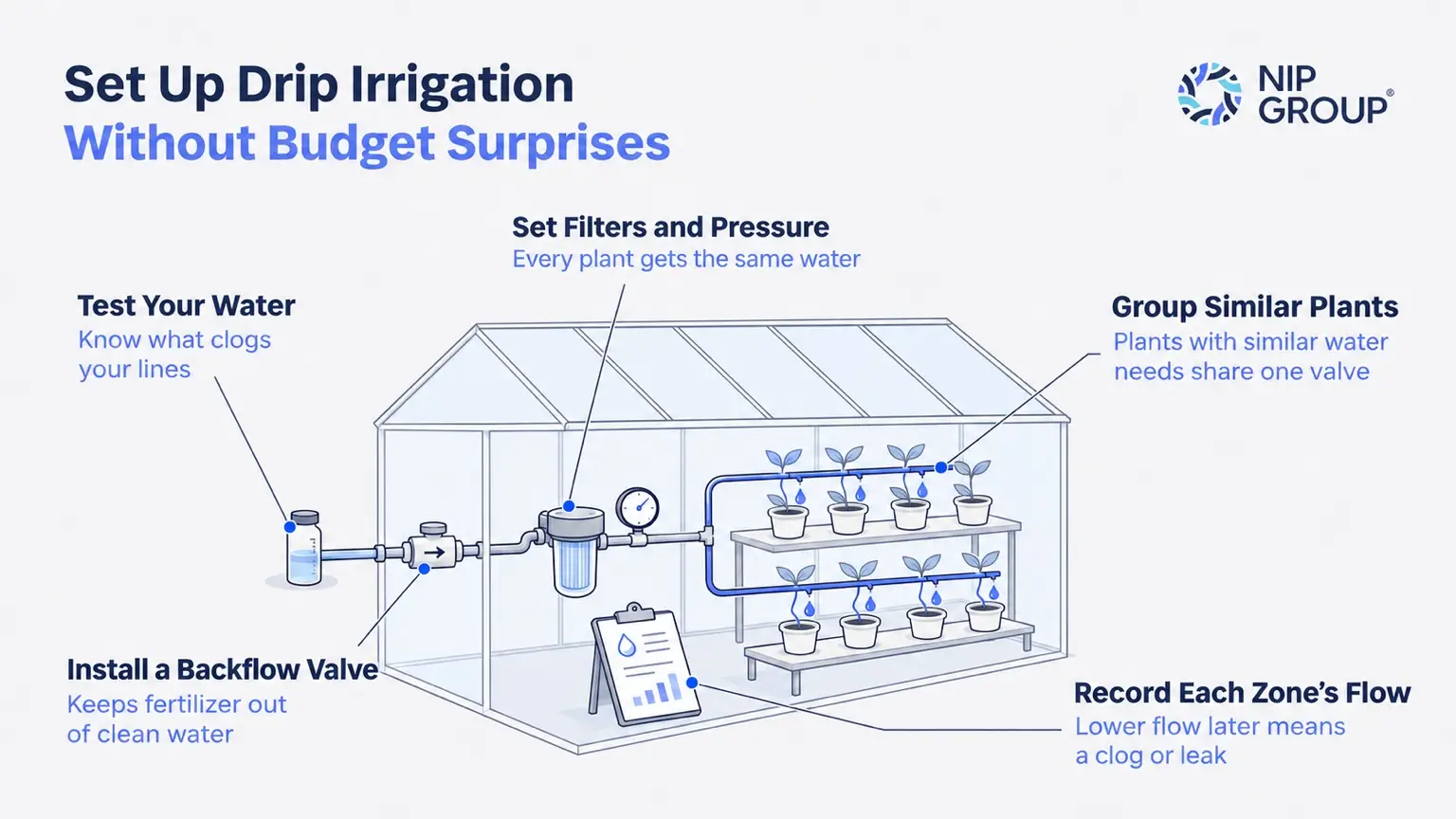
Set Up Drip Irrigation Without Budget Surprises
These steps add a few days to the job, but they also help your greenhouse irrigation system run right from the first planting, with no costly rework.
What Costs Show Up After Installation?
After installation, most of your costs come from upkeep, since a greenhouse irrigation system needs regular care to water evenly. So, plan for these yearly costs from your first season.
- Spare emitters and filter screens: Minerals and dirt in your water slowly clog emitters and wear down filter screens. Hard water makes this happen faster. So, flush your lines often and keep a few spares on hand to stop one clog from turning into many.
- Repair visits from a technician: Sensors lose accuracy over time, and timers need updates to keep watering on schedule. If no one on your team can handle this, you pay a technician for every fix.
- Higher power bills in summer: Your pumps use power every time they run, so this cost shows up on your monthly bill. It climbs in summer, when plants need more water and pumps run longer.
Of the three costs above, you can cut service calls easily by training your own staff. Once a team member learns the basic greenhouse irrigation upkeep, routine fixes like sensor checks can stay in-house.
What Happens to Your Budget When a Greenhouse Irrigation System Fails?
When a greenhouse irrigation system fails, these costs usually hit your budget harder than the broken part:
- Crop loss: When a pump stops in hot weather, plants can dry out before anyone notices.
- Customer injuries: A burst line can leave walkways wet, and a customer who slips may file a claim.
- Chemical runoff: Watering too soon after spraying pesticides can wash chemicals off your land, which means the cleanup bill lands on you.
- Worker injuries: Leaks near electrical pumps can lead to shocks and falls for your crew.
- Storm damage: Hail can break exposed pipes and controllers along with the greenhouse roof.
None of these losses appear on the system’s quote, which makes them easy to miss, so check your insurance before installation.
GrowPro was built for growers who face these risks every season. If hail breaks your pipes, its property coverage can pay for equipment and lost crop. If chemicals wash off your land, pollution liability covers cleanup, while general liability and workers’ comp handle injuries. Auto, inland marine, crime, and umbrella coverage can also be added as you grow.
But that protection only matters if claims get paid. A.M. Best, therefore, rates GrowPro’s insurance company A+ (Superior), meaning it has a strong financial ability to do so. Ask your broker to sign you up for GrowPro, or contact us before your next install to review your policy.
FAQs
1. Is it worth getting an irrigation system?
Yes, an irrigation system is worth it for most commercial growers. You gain in two ways:
- You get your time back because your crew no longer spends hours each day dragging hoses between benches.
- You get steadier crops as every plant gets the same amount of water and your crops grow more evenly.
2. What is the most efficient irrigation method?
Drip irrigation is the most efficient method for most growers. Small tubes carry water to the base of each plant, so almost none dries up in the air or runs off onto the floor. That means you pay for less water and your plants still get what they need.
3. What are some common problems with irrigation systems?
The most common problems with irrigation systems are leaks and blocked lines. Leaks usually start at loose fittings, where two pipes join, and leave puddles on the floor. Blocked lines often come from algae, which grows inside tubing in warm, bright greenhouses and slows the water down.
4. What is the cheapest method of irrigation?
Hand watering with a hose is the cheapest method to start, since you only need a hose and a nozzle. It does cost the most in labor over time. If you want automation, a basic greenhouse drip irrigation system on a timer is usually the most affordable choice.