








Summary
- Rising stock values and harsh freezes leave many nurseries underinsured for losses to living plants.
- Coverage designed for growers protects the plants on the benches and the people around them.
- This blog walks through what plant nursery insurance includes and what drives its cost.
Florida nurseries learned a hard lesson about cold weather early in 2026. Winter storms Ezra and Gianna brought freezes that the state’s growers had not seen in decades. State officials put greenhouse and nursery losses from those storms at about $240 million.
A loss like that reaches far past one bad week. Trees and shrubs can take several seasons to reach a saleable size, so dead stock erases years of work. Customer orders don’t pause for a freeze, either. Landscapers and garden centers still expect spring deliveries while growers replant their benches. That’s why how fast a nursery bounces back often depends on how its policy treats living plants.
With winter on the way, nursery owners have a short window to review their plant nursery insurance. This blog, therefore, walks through the coverage a nursery needs and what shapes its cost.
Must Read: How to Value Growing Stock for Greenhouse and Nursery Insurance
Why Does a Plant Nursery Need Its Own Insurance?
A plant nursery needs its own insurance because the most valuable thing it owns is a living stock. Most retail stock stays the same from the day it arrives until the day it sells. Nursery stock changes every day, gaining size and value with each season it survives.
That value has climbed fast. According to the USDA nursery stock sales reached $5.34 billion in 2024, a 17% jump from 2019. As stock values rise, a property limit set a few years ago can leave a nursery underinsured. One hard frost or failed heater could then destroy more value than the policy repays.
The stock is only one side of the exposure, though. Nurseries also welcome customers onto their lots and send crews out with chemicals and loaded trucks. Each of those activities can lead to a claim that a property policy will never cover. Owners shopping for insurance for plant nursery operations need protection for the plants and the people around them.
What Does Plant Nursery Insurance Cover?
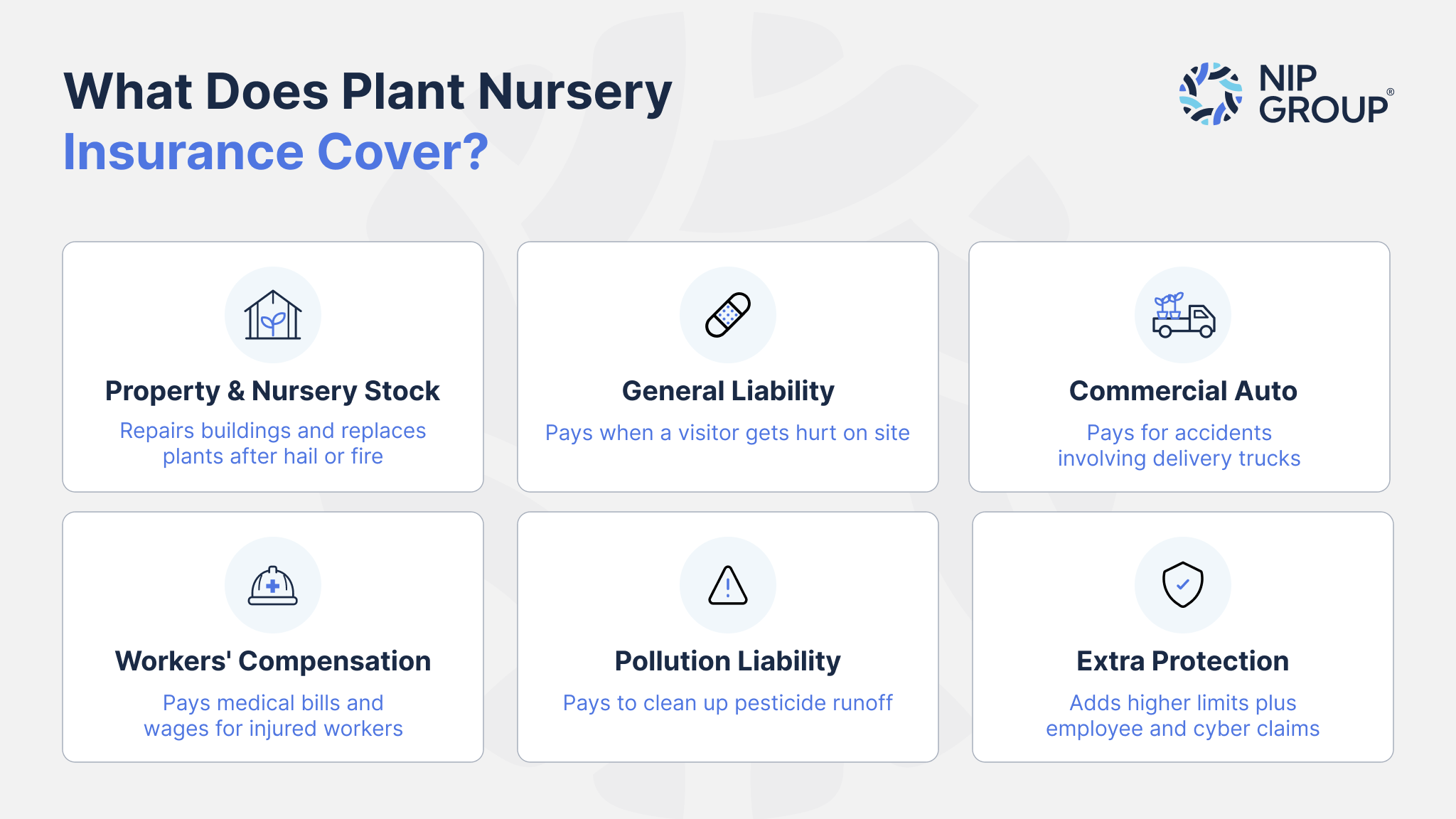
Plant nursery insurance protects the plants a nursery grows and the people who do business with it. Most growers bundle several coverages into one package to handle both sides. These are the coverages that package usually includes:
1. Property and Nursery Stock
Property coverage forms the base of any plant nursery insurance plan. After a covered event such as hail or fire, it pays to repair buildings and replace equipment.
Because a nursery’s inventory is alive, many policies also add crop loss coverage for plants killed by a covered event. Growers should look for greenhouse business insurance that names growing stock as covered property and explains how it is valued.
2. Pollution Liability
Pollution liability pays for cleanup and injuries to others when chemicals spread beyond a nursery’s property. Runoff from a bench treated with pesticide can wash into a storm drain or a neighbor’s yard. Many general liability policies limit or exclude that kind of claim, which is why a separate pollution policy matters.
3. General Liability
General liability steps in when a visitor gets hurt or the business damages someone else’s property. For a nursery, these claims usually come from a few familiar situations:
- Customer injuries: A shopper catches a foot on a loose hose in a garden center aisle and falls.
- Product claims: A customer blames the business for a problem with a plant or product it sold.
- Buyer visits: Wholesale buyers walk the rows to inspect stock and load their orders.
Wholesale growers need liability insurance for plant nursery work too, since buyers and drivers spend time on site.
What Does Plant Nursery Insurance Cover?
4. Workers’ Compensation
Workers’ compensation pays an injured employee’s medical bills and lost wages while they recover. That protection matters, where the daily work takes a steady toll on the body. The biggest risks come from routine tasks that crews handle every day:
- Heavy lifting: Crews move full containers and bags of soil many times a day, which strains backs and shoulders.
- Repetitive bending: Long hours stooped over benches can wear down joints over a single season.
- Chemical exposure: Workers who spray pesticides can suffer skin irritation or breathing problems.
- Long outdoor shifts: Running equipment through summer heat or winter cold makes accidents more likely.
These risks grow in spring, when busy order books bring in new seasonal workers. Because some states treat nursery work as farm labor, owners should check which rules apply before seasonal hiring starts.
5. Commercial Auto Liability
Commercial auto liability covers injuries and property damage caused by a nursery’s vehicles on the road. Loaded delivery trucks take on this risk every time stock heads to a garden center or job site. Personal auto policies rarely respond to business use, so every vehicle and driver should be listed on the commercial policy.
6. Extra Layers of Protection
A few smaller policies complete a plant nursery insurance program by covering risks the main lines leave open:
- Umbrella liability: When a serious claim runs past the general liability or auto limit, the umbrella pays the difference.
- Employment practices liability: Seasonal hiring brings new workers through the gate every year. This policy covers legal costs if a worker claims harassment or wrongful firing.
- Cyber liability: Nurseries that take orders online hold customer payment details and addresses. If that data is breached, this coverage helps pay to notify customers and restore systems.
What Affects Plant Nursery Insurance Cost?
Plant nursery insurance cost depends on a business’ risk level and the value of its stock. These factors primarily affecting the cost are:
- Stock and property values: Higher-value stock and buildings need higher property limits, which raise the premium.
- Location and weather: Growers in areas prone to freezes or hurricanes file more weather claims, and their property rates reflect it.
- Retail foot traffic: Every extra shopper is another chance for a slip or fall, so busy garden centers usually pay more.
- Vehicle fleet: More trucks and drivers mean more road miles and a higher commercial auto premium.
- Claims history: Past workers’ comp claims raise a nursery’s experience modification rate. Insurance companies use that score to adjust what the business pays.
- Chemical use: Regular pesticide use often calls for pollution coverage, which adds to the package cost.
Must Read: Greenhouse Technology in 2026: What’s New and What It Means for Your Coverage
Protect Your Stock Before the First Frost
Nursery owners can protect their stock by reviewing their plant nursery insurance before the first hard freeze. As the Florida freezes showed, one cold night can wipe out years of growth.
GrowPro is built for nursery and greenhouse growers, and it covers garden centers too. Its core lines are general liability, automobile liability, workers’ compensation and property insurance. Growers can also add umbrella liability along with contractors pollution and employment practices liability.
GrowPro’s insurance company also holds an A+ (Superior) rating from A.M. Best. In plain terms, the company is financially strong enough to pay claims, even when one freeze hits many growers at once. So, ask your broker to sign you up for GrowPro or contact us to look over your nursery’s coverage before winter.
FAQs
1. Does homeowners insurance cover a small plant nursery run from home?
Homeowners insurance rarely covers a plant nursery run from home. Most home policies exclude business activity, so customer injuries and lost stock may go unpaid. A separate business policy closes that gap, even for a small side operation.
2. Is plant nursery insurance required by law?
Plant nursery insurance is not required as one package, though parts of it often are. The parts most often needed are:
- Workers’ compensation: You need this in most states once you hire employees.
- Commercial auto: This is needed for business vehicles on public roads.
- Property coverage: It is usually required by lenders and landlords.
3. Do I need extra coverage to sell plants at farmers markets?
You may need to show proof of coverage before selling at farmers’ markets. Many organizers ask vendors for a certificate of liability insurance. Some also want to be listed as an additional insured on your policy.
4. What are the three types of nursery?
The three types of nursery are usually grouped by who they sell to:
- Landscape nurseries: They grow plants and install them on client properties.
- Retail nurseries: These sell straight to home gardeners.
- Wholesale nurseries: They grow plants in bulk for landscapers and retailers.