










The core of any safety protocol for a utility line clearing crew comes down to distance and preparation. Keep enough space from live lines, and put trained, properly equipped crews on every job.
Utility line clearance poses a higher risk of high voltage than most other tree care work. A missed distance check or an untrained climber near a live wire does not just put a worker’s life at risk. It puts your whole operation and your coverage in question. So, this blog discusses what a safety protocol for this work needs to cover, from planning through cleanup.
Pre-Job Planning and Distance Rules
The safest utility line clearing crews plan the job before anyone touches a saw. A short briefing at the start of each shift sets the tone for how the crew handles risk that day.
- Run a daily safety briefing: Walk through the day’s tasks and assign roles. Flag overhead lines, tree lean, or weather risk before the crew moves in.
- Treat every overhead line as energized: Keep a minimum of 10 feet from lines carrying up to 50 kV, and increase that gap as voltage rises.
- Keep qualified arborists on the line: Only workers trained under OSHA 1910.269 should operate inside the minimum approach distance.
- Request de-energization or covers: For branches close to a line, ask the utility to de-energize the circuit or install insulating covers before cutting.
These steps align with what OSHA and utility partners expect of any crew, ensuring safe and efficient utility line clearance.
Must Read: 3 Insurance Coverage Strategies for Utility Contractors
PPE and Ground Zone Safety
Personal protective equipment is the last line of defense once distance and planning are already in place. It needs to match the electrical risk of the job, instead of just the cutting risk.
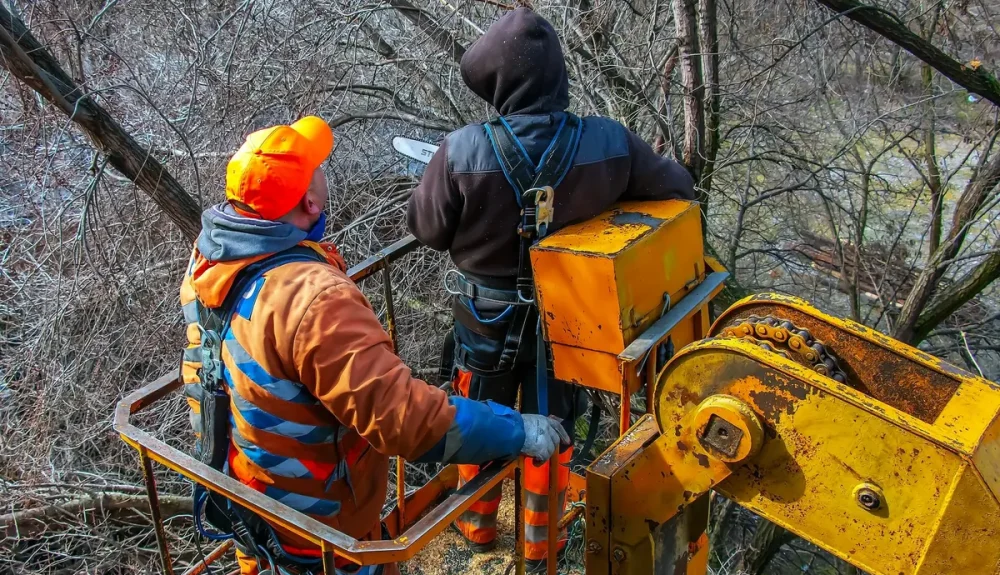
- Wear arc-rated gear on every job: Flame-resistant clothing, electrical-rated hard hats, insulated gloves, and eye protection belong on every crew member near a line.
- Inspect equipment before each use: Check chainsaws and climbing gear at the start of the shift. Tag out anything damaged and pull it from service.
- Secure the drop zone: Block it off with signs and barriers. Have the ground crew confirm eye contact with the cutter before stepping in.
A downed wire changes the rules completely. Treat it as live, no matter what it looks like, and hold the crew back 30 to 100 feet. Call emergency services before anyone approaches. This single habit, reinforced through proper utility line clearance training, prevents most of the serious injuries this work carries.
Must Read: How wildfire exposure and contract requirements can affect utility contractor insurance
Why These Protocols Protect Your Coverage Too
These protocols protect your coverage by keeping your business on the right side of both OSHA and your insurer. Skip them, and the risk moves from a possible incident to a probable one.
OSHA can issue willful violation penalties of up to $161,000. A pattern like that rarely stays contained to a fine. It can void your coverage or cost you a utility contract you have held for years.
Documentation is what keeps that from happening. Training logs and briefing records, as well as PPE compliance checks, show your insurer and utility client that the crew follows the standard on every job. These records also shape how insurers weigh insurance considerations for contractors when setting terms or reviewing a claim.
Utility line clearing carries a risk that a standard contractor policy was not built to absorb. Utility contractor insurance through UtilityPro covers general liability, workers’ compensation, wildfire liability protection, and contractors’ pollution liability for larger accounts. The program is backed by a carrier rated A+ (Superior) by A.M. Best.
This rating reflects strong financial strength, giving policyholders greater confidence that the insurer can meet its claims obligations. Ask your broker to sign you up for UtilityPro or contact us directly to review your coverage.