














“As more landscaping businesses shift to year-round operations, we expect 2026 to come with significant opportunities, challenges, and risks. Businesses will increasingly turn to AI and other technologies to help maximize efficiency, while exploring specialty insurance programs designed to address a growing set of industry-specific risks.”
– Michael Finati, LandPro Program Manager
With more than 726,000 businesses employing roughly 1.3 million employees, the U.S. landscaping services industry generates nearly $200 billion in annual revenue. As demand continues to increase, compound annual growth forecasts of 5.7% — driven by expanding infrastructure, sustainability initiatives, and commercial demand — will create new opportunities for both landscapers and their insurance brokers.

Source: www.mordorintelligence.com/industry-reports/united-states-landscaping-market
As a relatively high-risk industry, landscaping work exposes employees to slips and falls, equipment-related injuries, hazardous materials, heat and cold stress, and more. Brokers who understand these risks and the challenges that come with the shift toward all-season operations, an increased reliance on technology, and other industry trends, can help clients control risks and maximize profits.
5 Landscaping Industry Trends in 2026
With financial pressures and rapid technological advancements changing the way landscapers run their businesses, 2026 is likely to bring even more changes to the industry. As businesses look to get a leg up in a highly competitive marketplace, those that recognize new trends and adapt early and often will be well positioned to capture more market share.
Increased costs
Unsurprisingly, cost increases are expected to impact landscaping businesses (and their clients) in 2026. Two key drivers of this trend include higher wages and the rising costs of materials and equipment. Stiff competition and labor shortages are driving up wages, with many businesses focusing on long-term employee retention. In addition, tariffs on imports are likely to push up prices on landscaping materials and equipment, creating significant challenges for landscaping businesses’ bottom lines.
Continued adoption of AI tech tools
Though lawn care and landscaping work still rely primarily on manual labor, AI and other technologies are driving automation, safety, and efficiency for landscaping services businesses. Today, the majority of landscaping companies already use some technology, but for many, it’s limited to businesses management tasks such as accounting, invoicing, and proposals.
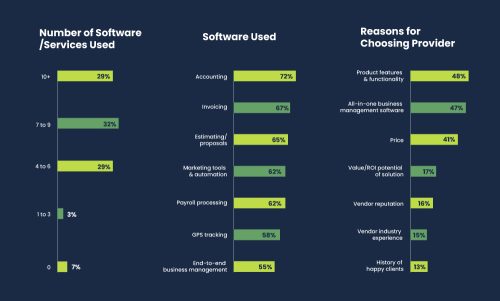
In 2026, we anticipate the expanded adoption of AI tools and other advanced technologies to help increase sales, promote efficiencies, and maximize profits. With hundreds of tools and applications designed specifically for landscaping operations, businesses can explore the benefits of technology for employee training, route optimization, site assessments, customer relationship management, and more. Even autonomous mowers are gaining popularity among landscaping business owners, particularly with the industry facing protracted labor shortages.
Shift to year-round operations
While landscaping businesses may have closed up shop for the winter in years past, a shift in priorities and consumer demand have more landscaping contractors offering their services year-round. These services may now include snow and ice removal and holiday lighting installs. Besides increasing revenue, year-round landscaping operations can help stabilize cash flows, strengthen customer relationships, and improve employee retention.
Focus on environmental solutions
More severe weather events — like droughts and floods — and increased consumer demand for eco-friendly landscaping solutions is changing the way landscapers work. For example, native gardens and rain gardens can help reduce flooding and control erosion, while green roofs can help reduce energy costs and improve stormwater management. In areas of the country that experience rain shortages, demand is also surging for drought-resistant gardens and fire-resistant landscaping.
Unpredictable regulatory environment
The current administration’s deregulatory agenda is at odds with the decision of several states and municipalities to restrict the use or sale of some gas-powered landscaping equipment. While worker safety tends to receive bipartisan support from members of Congress, conflicting priorities within the government could lead to unpredictable regulatory changes.
How Will These Changes Influence Landscaping Risk Insurance?
While revenue and profits are always a business priority, landscaping industry risk management has come into focus as lawsuits become more common and costly. General liability for landscapers often protects businesses from some of the more obvious perils but often excludes environmental liability coverage, green roof installations, snow and ice removal, cyber liability, and other risks landscapers might face today.
In 2026, demand for specialty landscape insurance is likely to rise. As businesses continue to adopt more technologies, hire new talent, and shift to year-round operations that include new and expanded services, comprehensive landscape coverage can serve as the foundation of a tailored risk management strategy.
Case Study: Snow Removal Results in Covered Claim for Landscaper
After several years of flat revenue, a landscaping business in New Jersey decides to expand its operations to include hardscaping, snow and ice removal, and holiday lighting installation. With heavy snowfall that winter, business is booming. However, after one snow removal job, an irate client informs the landscaper that the melted snow caused a leak in their basement, resulting in thousands of dollars’ worth of damage. After looking into the matter further, the company’s manager learned that one of the newer employees accidentally piled snow against one of the walls. Fortunately, since the business had a specialty landscaping insurance policy that included snow removal operations and workmanship error endorsement, the claim was covered.
Conclusion
The landscaping industry continues to grow more complex, bringing with it both new opportunities and new risks. With stiff competition and hundreds of thousands of landscaping businesses throughout the nation, brokers who have specialized expertise and tailored insurance solutions can build their portfolios and help their clients thrive.
While many insurers limit coverages to traditional landscaping activities, LandPro provides comprehensive all-seasons landscaping insurance designed specifically for today’s landscaper. With expanded coverages like snow removal operations, green roof and turf installation, and pollution liability, brokers can equip their clients with the tools they need to manage risks and maximize profits.
Submit your accounts today or visit the LandPro webpage to learn more.
12 Tech Tools to Help Landscapers Boost Revenues in 2026