








Summary
- Construction equipment theft is rising, and excavation sites have become easy targets for thieves.
- Good site habits and equipment theft insurance help you keep working after a theft.
- In this blog, we explain why these thefts happen and how to protect your machines.
Construction work across the country is still moving at a strong pace. The U.S. Census Bureau put construction spending at an annual rate of about $2.16 trillion in July 2026. For grading and excavation contractors, that means more machines sitting on job sites, often for weeks. Thieves have noticed that too. Sheriff’s offices in several states have spent this year looking for stolen excavators and the trailers used to haul them.
For a small contractor, a single equipment theft can stop work on a site overnight. The contract deadline, however, stays exactly where it was.
In this blog, we explain what is driving construction equipment theft and why excavation crews are hit harder than most. You will also learn how to lower your risk and where equipment theft insurance fits in.
Must Read: Equipment Insurance vs. Inland Marine: What Excavation Contractors Need to Know
What Is Driving the Rise in Construction Equipment Theft?
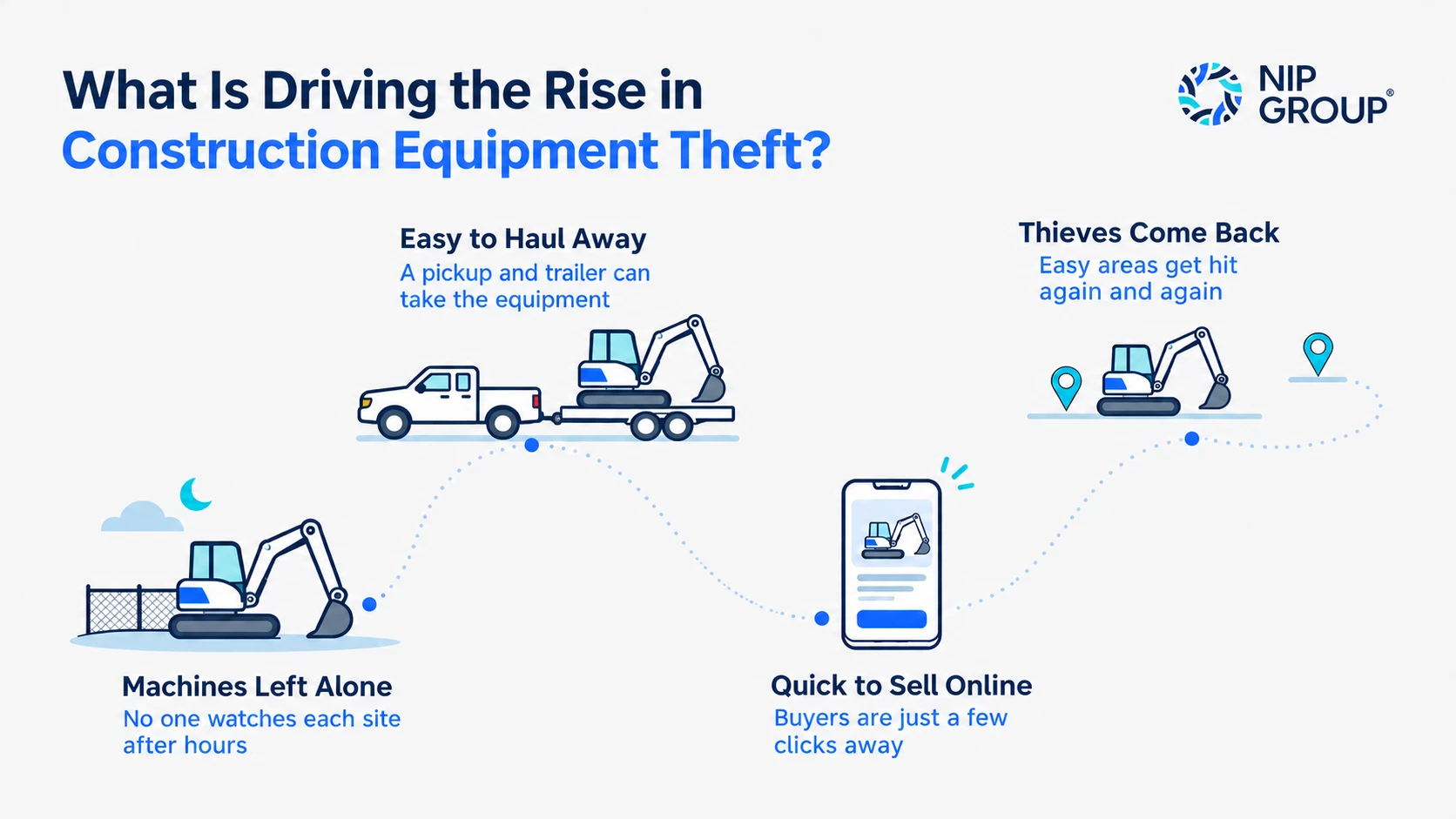
Construction equipment theft is rising because machines have become easier to take and much quicker to sell. Both trends trace back to changes in how crews work and how stolen goods change hands.
More Machines Spread Across More Sites
When work stays steady, many contractors end up running two or three jobs at the same time. Their machines get spread across those sites, which makes it hard to keep an eye on every one after hours. So a machine often sits alone on a quiet lot overnight, which is exactly what thieves look for.
Smaller Machines That Are Easy to Haul
Many crews now use compact excavators and skid steers for tight residential and utility jobs. The small size that lets these machines fit into tight spaces also makes them easy to move. That means a thief doesn’t need a large truck or special hauling gear to take one. With a pickup and a standard trailer, someone can load a machine in minutes and drive off before anyone notices.
Stolen Machines Sell Faster Online
Selling a stolen machine once took time, because a thief needed to find a buyer willing to ask no questions. Online marketplaces now put that buyer just a few clicks away.
That’s what investigators say happened in Kentucky, where a suspect listed stolen equipment on Facebook Marketplace. The listings included a John Deere excavator taken from a job site in Indiana. The seller then delivered it to buyers at a truck stop in Kentucky. Once a machine crosses state lines, police have a much harder time tracing it back to you.
Thefts That Repeat Across a Region
Once thieves find an area with easy targets, they tend to come back to it. Central Virginia shows how this plays out. Heavy equipment and trailers went missing there from September 2025 through April 2026. By May, two sheriff’s offices had teamed up to investigate the thefts. So, if thefts like these keep turning up near your jobs, treat each one as a warning that your sites could be next.
What Is Driving the Rise in Construction Equipment Theft?
Why Are Grading and Excavation Contractors Hit Harder?
Grading and excavation contractors face more theft risk because their machines often sit on open land for long stretches. That’s why this kind of exposure is one of the first things a good excavation business insurance policy has to account for.
The reasons come down to where your crews work and how long each job keeps your machines in one place.
- Sites far from anyone: Grading work usually starts on raw land, long before any homes or streetlights go up. So when a truck pulls in at 2 a.m. to load your excavator, nobody is around to see it.
- Machines that stay for weeks: Site prep jobs can run for weeks, and your machines stay parked through every night and weekend in between. That gives thieves plenty of time to study your site and pick their moment.
- Shared keys: Many older machines from the same brand and model use the same key. A thief who carries one of those keys can start your machine without breaking anything.
- Temporary fencing: Most job site fencing is put up to keep people from walking onto the site. A thief with bolt cutters can cut through it in minutes and drive your machine out.
What Does Stolen Construction Equipment Cost a Small Excavation Business?
Stolen construction equipment costs a small business far more than the price of the machine. Most of the extra cost comes from the work that stops while you wait for a replacement.
Say your only excavator disappears over a weekend. Your crew shows up on Monday ready to dig, and the costs start adding up from there:
- Rental fees: You spend the morning calling around for a rental instead of starting work. Even when you find one, the daily rate is a cost you never planned for.
- Idle crew pays: Your operators still need to be paid while they wait for the rental to arrive.
- Contract penalties: If the job has set milestones, a few lost days can trigger penalties that come straight out of your profit.
- Lost bids: With a small fleet, one missing machine is a big share of the work your crew can take on. You may have to turn down new jobs until it is replaced.
Replacing the machine is often the only way out, because many stolen machines are never found. Without equipment theft insurance, you pay for every part of this yourself, from the rental to the new machine.
Must Read: Heavy Equipment Maintenance Tips for Excavation Businesses
How Can You Lower the Risk of Equipment Theft on Your Sites?
You can lower the risk of theft by making your machines hard to start and easy to track. These theft prevention steps do both, and most of them fit easily into your crew’s daily routine.
- Install GPS trackers: Start your GPS heavy equipment theft prevention plan by fitting each machine with a tracker. If a machine is stolen, share its live location with police so they know exactly where to go.
- Stop the machine from starting: Pair your trackers with heavy equipment anti-theft devices like ignition immobilizers and hydraulic locks. Then add a hidden fuel shut-off switch so a thief cannot drive the machine away.
- Record every serial number: Write down each machine’s serial number and keep a few clear photos with it. If a machine is stolen, police can use that number to prove it is yours once they find it.
- Light the site and add cameras: Keep the site well lit at night and mount cameras where thieves can see them. If a theft still happens, hand the footage to police so they have a place to start.
- Control keys and parking: At the end of each day, take the keys off site so no one can start your machines. Park smaller machines behind larger ones so thieves cannot easily reach or load them. Keep a short end-of-day checklist so your crew follows these steps even when they are rushing to leave.
These habits pay off beyond the job site, too. When you file a claim, your serial number records and photos show exactly what was taken. That proof helps the claim move faster. Insurance companies also weigh these steps when they price your equipment theft insurance.
Where Does Equipment Theft Insurance Fit Into Your Plan?
Equipment theft insurance is the backup layer of your theft plan, and it pays when prevention falls short. Trackers and locks lower your odds of a theft, while this coverage protects your business if one still happens. So, before you ever file a claim, go over these parts of your equipment theft insurance with your broker:
- List every machine: Add new and rented machines to your equipment theft insurance as soon as they arrive. Unlisted machines may not be covered.
- Know how machines are valued: Ask whether your policy pays actual cash value, which subtracts wear, or replacement cost, which pays closer to today’s price.
- Cover your rental costs: Check how many rental days your equipment theft insurance pays for, since replacing a machine can take weeks.
- Include attachments and trailers: Make sure costly attachments like breakers are covered, along with the trailer that hauls your machine.
- Follow the security terms: Store machines the way your policy requires, such as in a locked or fenced yard overnight. Skipping that step can get a claim cut or denied.
SitePro was built with these details in mind for grading and excavation contractors. Its inland marine coverage gives you equipment theft insurance that responds when a machine is stolen from a job site. Alongside it, you get general liability, commercial auto, property, umbrella, workers’ comp, pollution liability and crime coverage.
SitePro is also backed by an insurance company that A.M. Best rates A+ (Superior). That rating tells you the company is in strong financial shape and can pay claims when you file them. Ask your broker to sign you up for SitePro or contact us to review your equipment coverage before your next renewal.
FAQs
1. How much does equipment theft insurance cost?
The cost of equipment theft insurance depends mostly on the total value of the machines you insure. Insurance companies also look at:
- Where your job sites and yard are located
- Your past theft claims
- The deductible you choose
- The age and type of your machines
Your broker can compare quotes once your equipment list is ready.
2. Does equipment theft insurance cover tools stolen from my truck?
Equipment theft insurance can cover tools stolen from your truck, as long as your policy includes them. Many policies place small tools under a separate limit, sometimes with a cap on each item. Some policies also exclude theft from an unlocked vehicle. Ask your broker whether your hand tools and power tools need their own coverage.
3. What should I do right after equipment is stolen from my site?
Right after equipment is stolen, act quickly so the machine has the best chance of being found. Work through these steps the same day:
- Call the police and give them the serial number
- Share the tracker’s live location if the machine has GPS
- Notify your broker to start the claim
- Gather photos and purchase records for the claim
4. Is equipment theft insurance required for excavation contractors?
In most cases, no law requires equipment theft insurance for excavation contractors. Lenders and leasing companies often do, though. If you financed or leased a machine, the lender usually wants proof it is insured against theft. Rental companies may ask for the same proof before they release a machine to your crew.