






“Tree care businesses depend on their fleet of vehicles for everyday operations, from chipping and transportation to pruning and plowing snow. Standard insurance policies may fall short of securing the business and its assets, excluding key coverages or failing to address the complexities and key needs of an arboriculture company.”
– Tim Greifenkamp, CPCU, GrowPro Program Manager
With over $160 billion in annual revenue in 2023, the tree care industry is steadily growing and showing signs of renewed life after a pandemic-induced lull. As economic and construction growth swell, demand for arboriculture will rise, creating new opportunities for arborists and other tree care businesses. For commercial brokers and tree care businesses committed to capitalizing on these opportunities, specialized tree care insurance will continue to play an even more critical role.
Tree Care Work Is One of the Riskiest Occupations
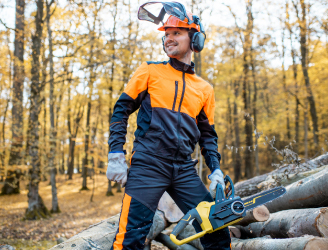
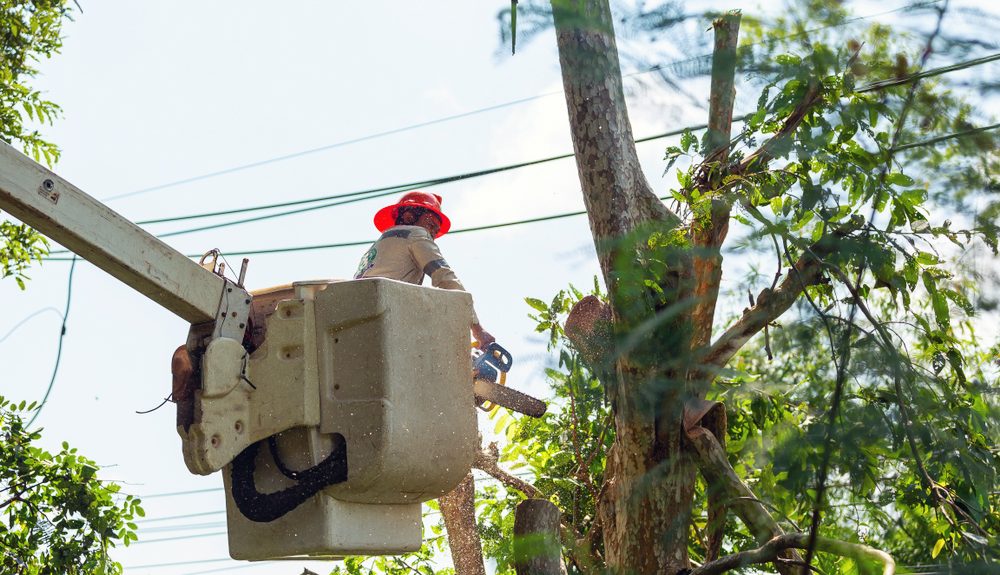
It’s no secret tree trimming can be dangerous. Logging consistently ranks at the top of the most dangerous jobs list, and arborists are frequently tasked with felling trees. According to TCI Magazine, the two most common risks to tree care workers are contact with objects or equipment; and slips, trips, and falls. These risks can also lead to struck-by injuries, which is one of the leading causes of worker fatality in the tree service industry. If arboriculture wasn’t dangerous enough already, consider the hazardous conditions under which tree care workers consistently operate, in congested cities, in close contact with utility lines, and in all weather conditions. In addition to higher injury and fatality rates relative to other occupations, tree care businesses also face increased liability risks due to the nature of their work.
Specialized Commercial Auto Coverage is Key
Arborists and tree care companies rely heavily on their fleet of vehicles for much more than simple transportation to and from job sites. An arborist’s fleet might include smaller vehicles like pickup trucks and box trucks, along with larger and more expensive chipper trucks, bucket and boom trucks, and dump trucks. These vehicles are the linchpin of virtually every tree care business, which is why insuring them is crucial for the success of any arboriculture, tree trimming, or logging operation.
Where does traditional commercial auto fall short?
The typical commercial auto insurance policy covers some important basics, like liability and property damage, and often resembles a personal auto policy. Unfortunately, that often means commercial auto policies have significant coverage gaps that can leave tree care companies exposed to potentially costly risks. These gaps may leave businesses completely exposed or underinsured against liability and property losses.
What Should a Specialized Commercial Auto Policy Cover?
A specialized commercial auto policy should be tailored to the specific needs of the business. Specialized commercial auto insurance will have the same basic coverages of a standard policy, recognizing the particular perils of the occupation and providing additional coverages to fill the gaps.
Broader liability coverage with higher limits
Liability coverage is a central component of any auto insurance policy and is mandatory in almost every state. For a business, specialized liability protection and higher coverage limits can help minimize potential out-of-pocket costs in the event of a commercial auto claim. Arborists contend with branches weighing hundreds of pounds and work in hazardous environments, translating to greater liability exposure.
Tree care businesses also face additional liability risks when engaging in ordinary operations, such as transporting pesticides or plowing snow. The diversity of services tree care companies offer opens them to new and varied liability risks, some of which might be excluded under standard policies or warrant higher liability limits. For example, a standard commercial auto policy may exclude auto pollution, which could be a costly mistake for a business owner. Insurance for arborists should have broadened auto liability pollution coverage, which could protect them from environmental risks and third-party injuries caused by chemical spills.
Collision, physical damage, and theft
Even the safest, most experienced drivers can make mistakes, not to mention accidents that are out of their control. Whether you’re a broker who helps insure arborists or you own a tree care business yourself, you know how expensive bucket trucks, dump trucks, and chipper trucks can be. Since these vehicles are among the most valuable and important assets of a tree care business, protecting them should be a top priority. Aside from the risk of road accidents, these vehicles can sustain damage from falling objects such as tree branches.
Though it might seem unlikely, theft of commercial vehicles is a very real risk. More than one million vehicles were reported stolen in 2023, with full-size pickup trucks representing the highest theft rate. Specialized vehicles like those used by arborists often double as equipment.
Personal injury protection
In several states – those known as no-fault states – commercial auto insurance policies must include personal injury protection (PIP). Every business should strive to protect its employees, which often entails purchasing personal injury protection even if it’s not required or adding coverage that exceeds state minimums. Tree care companies also have a vested interest in helping their employees recover after an accident as quickly as possible, particularly because of the growing shortage of qualified arborists. A specialized commercial auto policy should include PIP where applicable or offer it as an optional coverage if the business operates in multiple states.
Loss of use coverage
Damage or loss of a vehicle can cause significant damage to an arborist’s business and profits, leaving them to choose between turning down jobs or renting the equipment and vehicles they need to keep their business up and running. Loss of use or loss of revenue coverage can help protect tree trimming businesses from the financial fallout of vehicle damage. Basic commercial auto insurance can cover repairs or even the full replacement cost of a vehicle, but in the meantime, the missed opportunities could cost the business tens of thousands of dollars.
Customized Coverage Provides Greater Protection
Tree trimming is a specialized business and one that necessitates specialized insurance coverage to address its unique needs and risks. Insurance coverage for tree services businesses should go beyond the basics, especially when it comes to the fleet of vehicles that support arborists’ daily work.
NIP Group’s suite of specialty insurance products is tailored to meet the specific needs of the businesses they serve and includes customized arborists insurance. Whether you’re a commercial broker serving arborists or you own and operate a tree trimming business, TreePro is the comprehensive, state-of-the-art risk management program built around the risks of tree care professionals. To supplement coverages and protect the business’s fleet, NIP Group also has the monoline commercial auto insurance to secure every vehicle for what it’s worth.
Don’t settle for standard insurance products when there’s a better option. Learn more about how TreePro and FleetEdge offer superior protection for tree care businesses and their vehicles, submit your accounts today, or speak to a program manager to get a quote today.
Sources
- https://www.osha.gov/tree-care/hazards-solutions#
- https://www.forbes.com/advisor/legal/workers-comp/most-dangerous-jobs-america/
- https://www.ibisworld.com/industry-statistics/market-size/tree-trimming-services-united-states/
- https://tcimag.tcia.org/safety/tree-work-safety-by-the-numbers/#
- https://www.tdi.texas.gov/pubs/videoresource/fstreetrim.pdf
- https://www.nytimes.com/2020/10/07/climate/new-england-trees-forests.html
- https://www.insurancebusinessmag.com/us/news/breaking-news/personal-injury-protection-insurance–a-statebystate-guide-324528.aspx#
- https://www.forbes.com/advisor/car-insurance/pip-guide/
- https://www.iii.org/fact-statistic/facts-statistics-auto-theft