









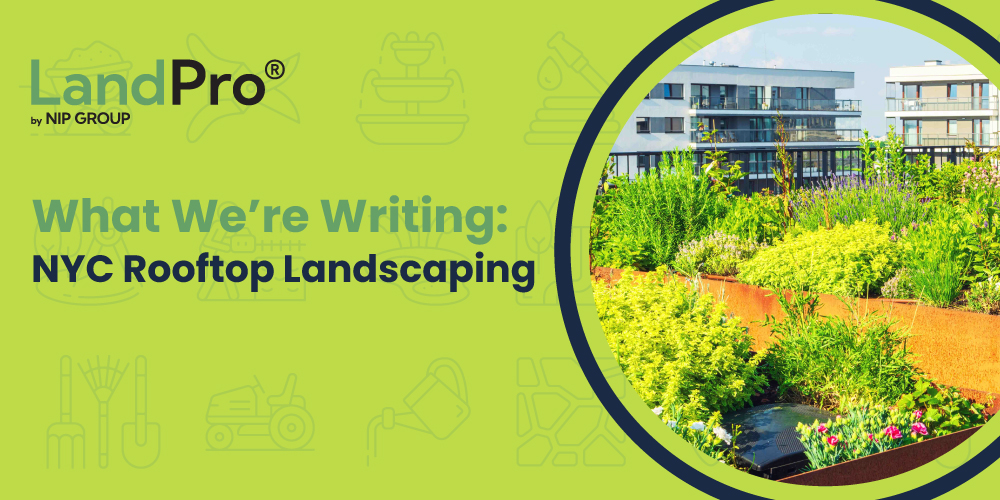
Landscaping in New York City can look very different from landscaping in other parts of the country. Instead of expansive lawns and open commercial properties, contractors may find themselves several stories above street level, installing and maintaining outdoor spaces on rooftops throughout the city.
These specialized operations can create placement challenges for brokers, particularly when rooftop work isn’t simply an occasional project but a significant part of the contractor’s business.
That’s exactly what made one recent LandPro account stand out.
The Account: Landscaping Above Street Level
This New York City landscaping contractor provides services around hardscape and maintenance for buildings throughout the city. What makes the business particularly unique is where much of that work takes place: on rooftops.
In fact, rooftop work represents the majority of the contractor’s operations.
For the agent, that significant rooftop exposure had made the account difficult to place. But the business also represents the changing face of commercial landscaping, specifically in dense urban markets where contractors may increasingly be asked to install, service and maintain outdoor spaces in unconventional locations.
Looking at the Full Operation
Rather than viewing the contractor’s rooftop work alone as a reason the account couldn’t be considered, the LandPro underwriting team evaluated the exposure within the context of the overall landscaping operation.
That ability to consider the rooftop work was particularly important because it wasn’t a small incidental exposure that could simply be carved out of the account. It was central to what the contractor does.
Ultimately, LandPro was able to provide a monoline General Liability solution for the business.
For the broker, that meant finding a solution for an account whose primary operations had previously presented a placement challenge.
What This Means for Brokers
The landscaping industry keeps expanding past traditional lawn care and landscape maintenance.
In major metropolitan markets such as New York City, contractors may work on rooftop gardens, hardscapes and other outdoor environments that require insurers to understand a different set of operations than they might encounter with a traditional landscaping business.
That’s why it’s important not to assume an unusual exposure automatically puts an account outside of LandPro’s appetite.
This recent win demonstrates LandPro’s willingness to take a closer look at specialized landscaping operations and understand how the different components of the business fit together.
For brokers, the takeaway is simple: if you have a landscaping account that’s difficult to place because its operations don’t fit neatly into a traditional box, it’s worth a conversation with LandPro.
Have a specialized landscaping account? Talk to the LandPro team about your next submission.