









Summary
- Utility work is growing fast, and outdated gear puts crews at higher risk every shift.
- The right lineman tools keep your crew efficient and protected on every job.
- This blog breaks down the essential lineman tools by category, plus the coverage that protects your business.
The global power tools market is set to grow from $30.92 billion in 2026 to $45.74 billion by 2034. That is according to Fortune Business Insights. Industrial use already drives most of that growth, instead of home projects. Construction and energy work sit at the center of that shift.
Lineman work makes up a huge part of it. The Bureau of Labor Statistics projects 7% growth for electrical power line installers and repairers through 2034. That is much faster than the average for all occupations.
This growth means more crews in the field, right as thousands of new hires enter the trade. But none of that work happens safely without the right lineman tools in hand. The risk that comes with this work is well documented, and it explains why..
Why Does Lineman Work Carry So Much Risk?
The Electrical Safety Foundation International tracked workplace electrical fatalities from 2011 through 2024. The group counted 2,070 deaths tied to electricity over that period. Non-fatal electrical injuries jumped 59% in 2023 and 2024 alone, compared to the two years before that.
Falls add another layer of danger to an already tough job. Your crew climbs poles and rides aerial lifts to heights over 100 feet on a regular day. One piece of failed equipment or one bad weather call can turn that routine climb into a fall.
This is where quality lineman tools and proper protective gear earn their keep. That is why smart crews check their lineman hand tools before every single shift.
Must Read: Why Power Transmission Line Work Gets More Dangerous Every Year
What Lineman Hand Tools Belong on Every Truck
Every crew relies on a core set of lineman tools. So here’s all that should ride in your truck, and why each one earns its spot.
- Insulated hot sticks: These keep your crew’s hands a safe distance from live equipment during switching and testing.
- Rubber insulating gloves and sleeves: Rated for the voltage on site, they form the last barrier between your worker and a shock.
- Cable cutters and crimping tools: These give you clean splices and secure connections without weakening the conductor.
- Torque wrenches: A properly torqued connection stays code compliant and avoids a callback down the road.
- Grounding sets: These de-energize a line before work starts, which is the single step most safety programs build around.
These tools protect a worker’s hands, but only when your crew inspects them regularly. A cracked glove or a chipped hot stick can’t protect your worker the way it should.
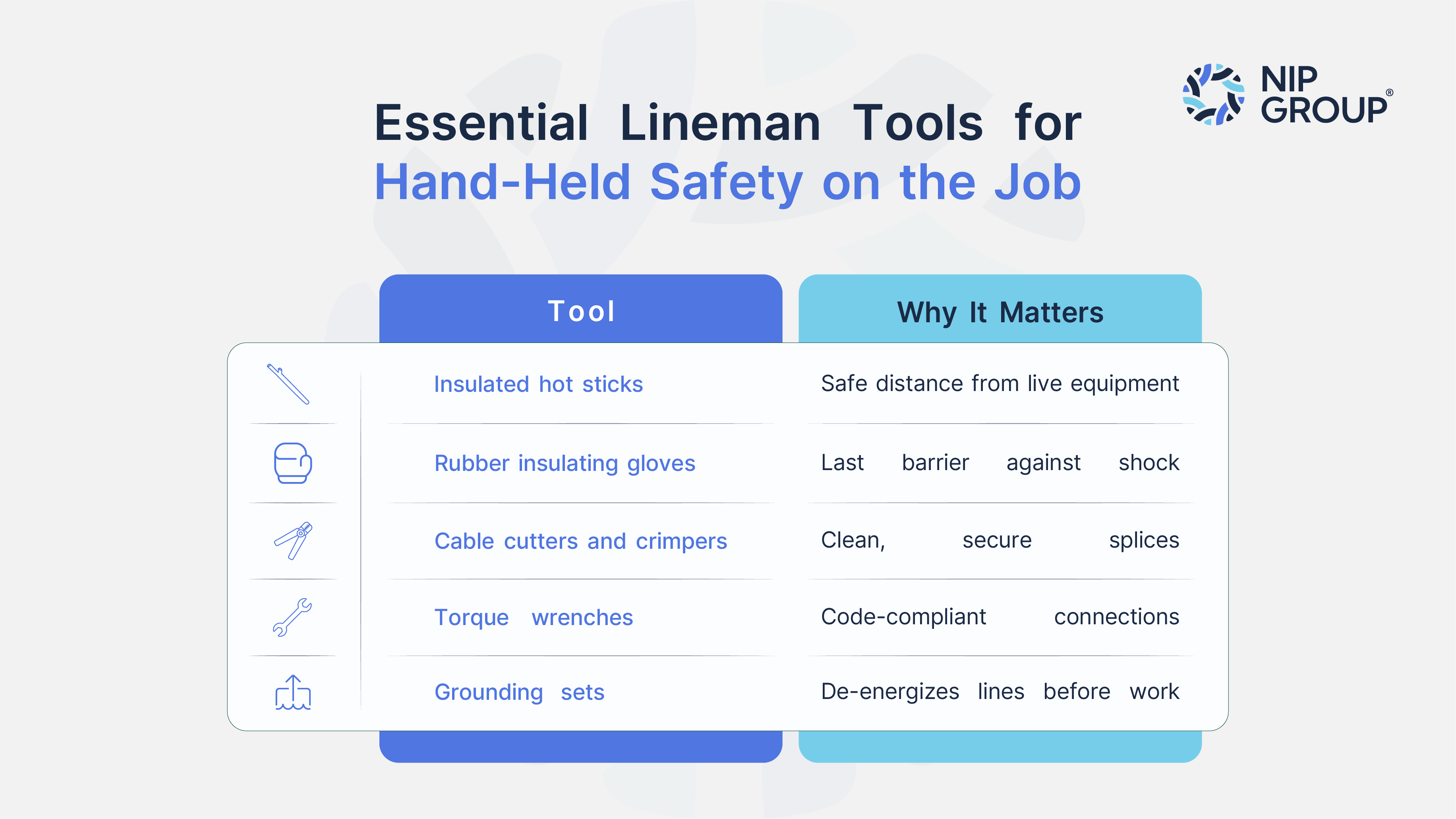
Essential Lineman Tools for Hand-Held Safety on the Job
What Belongs in a Lineman Tool Kit for Climbing and Aerial Work
Climbing and aerial work call for a different lineman tool kit altogether. Your crew already knows this. Bucket trucks get everyone to the height a job demands, but that truck is only half the picture. What a worker straps on before stepping off the platform matters just as much.
- Climbing saddles, ropes, and lanyards: Rated for the job at hand, these tools hold a worker’s full weight if a foothold gives way.
- A second tie-off point: It backs up the primary connection, so one failure does not mean a fall.
- Class E hard hats: Rated for electrical work, these protect against impact and limited electrical contact overhead.
- Cover-up equipment: This keeps energized parts at a safe distance while your crew works around them.
- Voltage detectors: These confirm a line is de-energized before anyone makes contact with it.
Falls remain one of the leading causes of lineman injury every year. That is why a second tie-off point has become standard on most certified crews.
What Makes Underground Lineman Tools Different
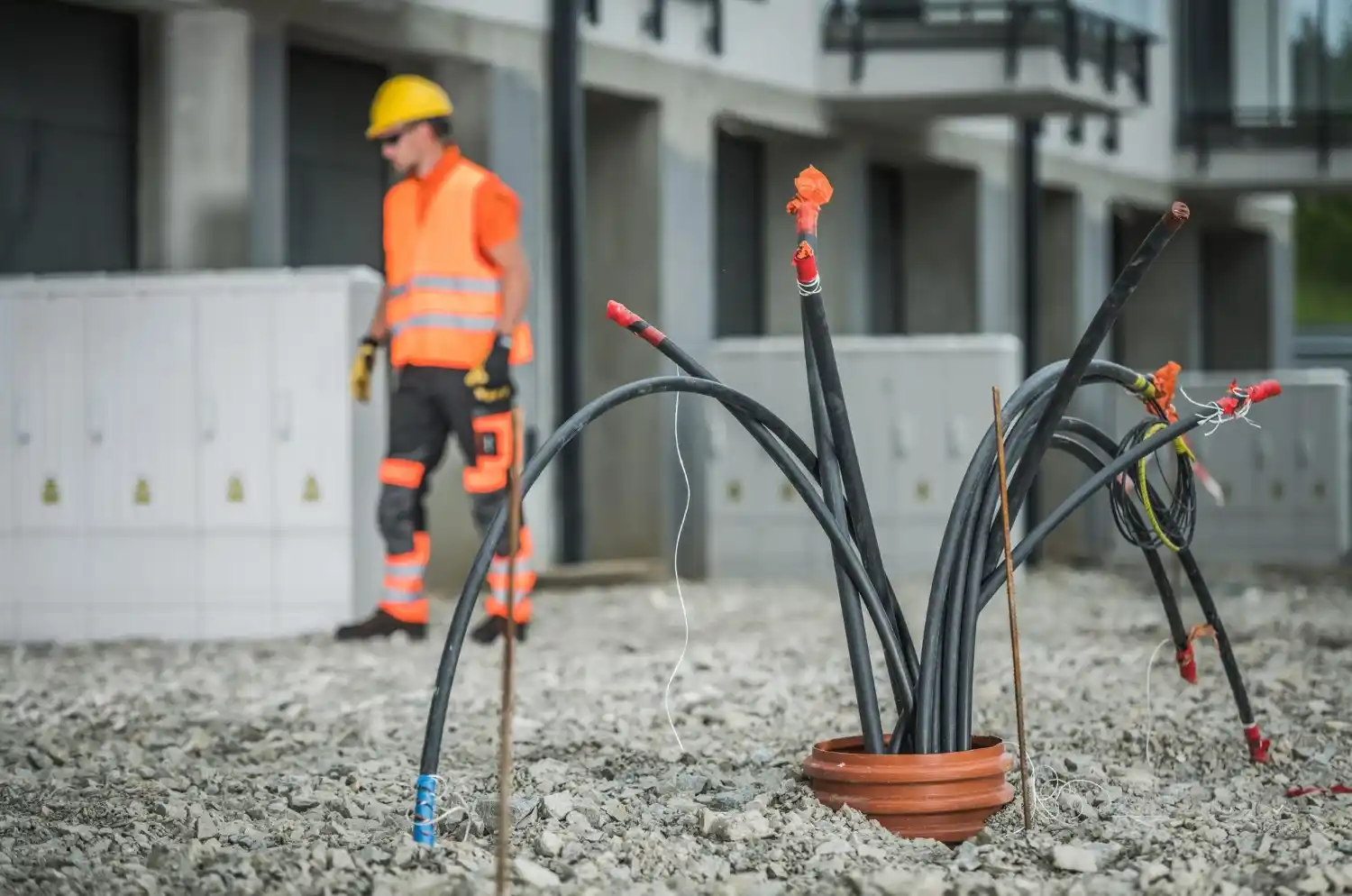
Underground work uses a different skill set and a different set of lineman tools. Your crew cannot see what it is cutting into, so precision matters more than speed.
- Cable locators: These map buried lines before digging starts, which prevents a costly strike on the wrong conductor.
- Trenching tools sized for the job: The right size keeps a dig narrow and reduces disturbance to nearby utilities.
- Cable splicing kits: Built for underground-rated conductors, these keep a splice sealed against moisture over time.
- Gas detectors: They warn your crew before they get close to a buried gas line.
A single missed cable locator reading can strike a gas line. That kind of mistake is not cheap to fix. So, underground lineman tools protect your crew from that outcome. They also protect the property around the job site.
Why the Best Lineman Tools Don’t Entirely Cover the Risk
Your lineman tools can only do so much once a job turns unpredictable. A downed wire or a single miscommunication can still cause serious harm.
Storm restoration work raises the stakes even higher. Your crews move fast, sometimes in the dark, often near downed lines still carrying a charge. One contact with an energized line can end in a fatality or a lawsuit. A damaged transformer or a snapped pole can also mean thousands of dollars in third-party property claims.
So, general liability alone will not always respond to this kind of exposure. Think about how much equipment rides with your crew. Many utility contractors carry gear worth hundreds of thousands of dollars on any given job. Without the right coverage, a stolen truck of tools or a damaged bucket lift comes straight out of your pocket. This is where dedicated utility contractor insurance changes the outcome for your business.
Must Read: Powering Protection: UtilityPro Insurance for Utility Contractors
Coverage That Matches the Risk
UtilityPro was built with this reality in mind. It is designed specifically for utility contractors, and it includes:
- Primary and excess liability up to $25 million
- Wildfire liability protection, including coverage in California
- Workers’ compensation built for high-risk utility work
- Coverage for subcontracted work on larger projects
- Pollution coverage and auto pollution protection
- Blanket additional insured and workmanship error endorsements
That $25 million excess limit is what stands between your business and a claim that outgrows a standard policy on a large transmission job. UtilityPro is also backed by carriers rated A+ for financial strength, meaning they have a superior ability to pay claims when they come in.
That rating is the one that counts the day a real claim lands on your desk. So, talk to your broker and sign up for UtilityPro, or contact us directly. We are glad to help you find the right fit before your next big project starts.
FAQs
1. What kills linemen the most?
Electrocution tops the list, and it is not close. Contact with an energized line is the biggest threat during pole and aerial work. Falls from height come in second, which is why the gear you put on your crew matters so much.
2. What do electricians call lineman pliers?
You will usually hear them called “linesman pliers,” though plenty of crews just say “side cutters.” Whatever the name, the tool does double duty. It cuts and grips in one insulated handle, so your crew is not fumbling for a second tool mid-job.
3. What are 5 skills you need as a lineman?
Being a good lineman takes more than knowing your way around the tools. Here are five skills that matter most on the job:
- Strong hand-eye coordination for precise work at height
- Physical stamina for long shifts outdoors
- Comfort working with hand tools and testing equipment
- Clear communication with a crew during live work
- Sound judgment under pressure during storm restoration
4. How physically fit do linemen need to be?
Your crew needs enough strength to climb poles and carry heavy gear through a full shift, in weather that will not always cooperate. That is why most training programs build regular conditioning into the job from day one.