











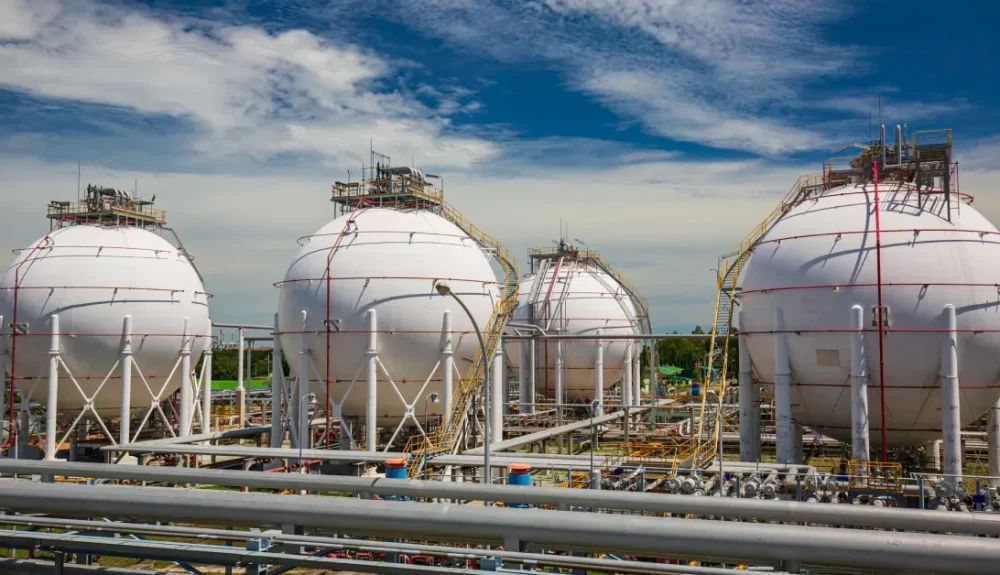
Summary:
- Propane distributors juggle overlapping DOT regulations on transporting propane tanks, and enforcement scrutiny keeps rising.
- This guide translates the paperwork and testing rules into clear, actionable steps.
- Staying compliant protects your fleet operations and keeps client contracts running smoothly.
On November 20, 2025, PHMSA announced a new data-driven framework for hazmat inspections and enforcement. The memo directs inspectors to focus on shipper classification and package selection, including areas with the greatest safety impact. If your last compliance review sat untouched for a year, this deserves a second look.
Federal rules on propane transportation spread across two regulatory books. The Federal Motor Carrier Safety Regulations and the Hazardous Materials Regulations split coverage between them. One handles shipping papers and driver conduct. The other governs cargo tank testing and cylinder construction. Distributors often master one side and lose track of the other. Solid driver training means little if your cargo tank missed its last test date.
This guide pulls both books together, so the DOT regulations on transporting propane tanks stop feeling like two separate problems.
Must Read: Propane Tank Inspection and Maintenance: What LPG Dealers and Distributors Need to Know
ASME vs. DOT Propane Tank: Why the Distinction Matters for Transport
Before you can follow DOT regulations on transporting propane tanks, you need to know which rules apply to your equipment. ASME (American Society of Mechanical Engineers) tanks are the large, permanently installed units at customer properties. They stay in place and aren’t built for repeated transport.
These DOT cylinders work differently. They travel between fill stations and customer sites. Since they move, PHMSA and DOT regulate their construction and markings, with their testing cycle closely. Confusing these two categories is a common mistake among newer operators.
If your business handles both stationary ASME tanks and portable DOT cylinders, treat them as separate compliance tracks. The ASME vs DOT propane tank distinction shapes almost everything else in this guide.
The Core DOT Regulations on Transporting Propane Tanks
The DOT propane tank regulations break down into a handful of categories. Each one carries its own paperwork and its consequences for getting it wrong.
Classification and shipping papers
Every shipment of propane needs a proper shipping name and hazard class with an identification number. These instructions fall under 49 CFR 172.200 through 205. Your papers must also include a 24-hour emergency contact number. Hold on to those records for at least a year. When inspectors show up, this is usually the first thing they ask for. That’s why it needs to be current and accessible.
Packaging and cylinder selection
Your cylinders and cargo tanks must match the requirements listed in the Hazardous Materials Table under 49 CFR 173. It means the equipment carrying propane has to meet specific construction and performance standards. A tank that looks solid on the outside still has to check every one of those boxes.
Placarding on the vehicle
Placarding is where most drivers interact with these rules directly. Vehicles carrying placardable quantities of propane must display the correct hazard placards on all four sides. A missing or faded placard is one of the most common violations FMCSA inspectors cite during roadside checks. It is also one of the easiest to prevent.
Loading, unloading, and storage
Loading and unloading procedures matter just as much. Propane must be secured to prevent shifting during transit. It needs to stay separated from ignition sources and incompatible materials. OSHA’s standard for LP-gas storage and handling, found at 1910.110, reinforces this at the facility level. It covers how tanks are positioned and kept clear of open flame.
Cargo tank testing
Cargo tank condition rounds out the core requirements. Tank trucks used for bulk delivery must be tested and marked. You should maintain them according to their own testing schedule under Part 180. A tank that misses its test date cannot legally haul propane, regardless of how well it performed on its last route.
Every one of these categories connects to the next. Weak shipping papers make a placarding mistake harder to catch. A skipped cargo tank test undermines everything else on the truck. Treating these DOT regulations on transporting propane tanks as one connected system keeps a distribution operation compliant.
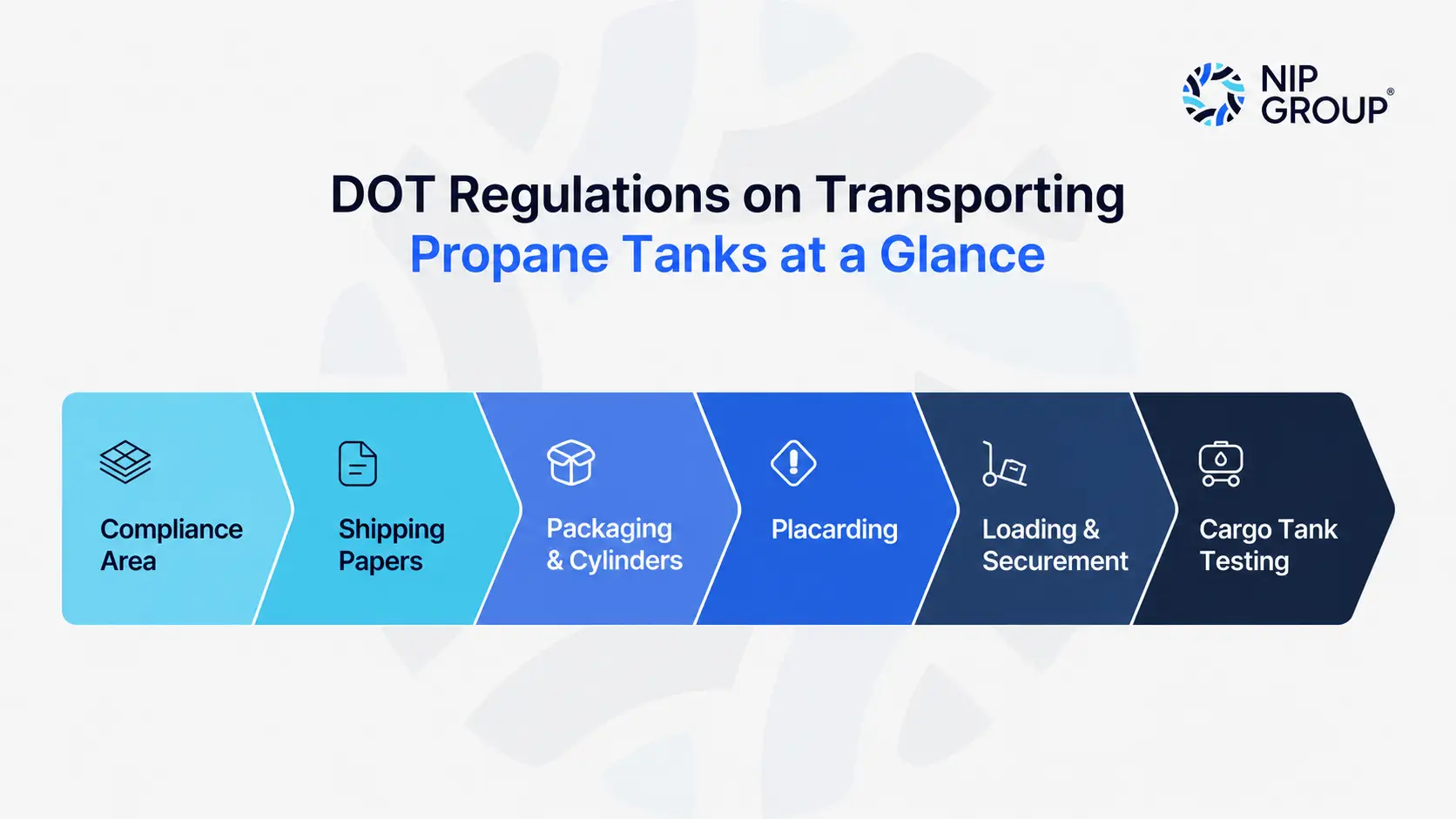
DOT Regulations on Transporting Propane Tanks at a Glance
DOT Propane Tank Recertification
Portable cylinders follow a requalification schedule tied to the testing method used last. That schedule typically runs five, seven, or twelve years. Once the stamped date expires, the cylinder comes out of service right away. No fill station can legally load it, and no carrier can legally haul it from that point on. This is why the date deserves a check before every delivery run. One expired cylinder sitting in a mixed load can hold up the whole shipment.
Must Read: When Does Propane Tank Recertification Become Necessary?
Driver Requirements: What Compliance Means Behind the Wheel
The rules do not stop at the tank. The person driving the truck carries real regulatory weight too:
- A valid CDL with a hazardous materials endorsement, issued at the state level
- Recurring hazmat training every three years, covering safety and security, including function-specific tasks
- A background check tied to the hazmat endorsement, renewed periodically
- Familiarity with emergency response procedures and shutoff points on the vehicle
Skipping any one of these puts your LPG transport operation at risk during a roadside inspection. It can pull your entire fleet into deeper scrutiny as well.
What Happens When Transport Compliance Slips
A hazmat violation doesn’t disappear after the ticket gets paid. It follows your business for 24 months through FMCSA’s Safety Measurement System. It’s the tool that scores carriers on safety performance. That score shows up when you renew contracts or when a commercial client checks your record before signing. It also shows up in conversations with your insurance broker.
A fine is the smallest piece of this picture. The bigger risk shows up on delivery day itself. A cylinder fails during transit, or a spill happens at a customer site. That’s a different order of problem, and no amount of paperwork undoes it. It’s the kind of event a solid propane insurance program is built to respond to.
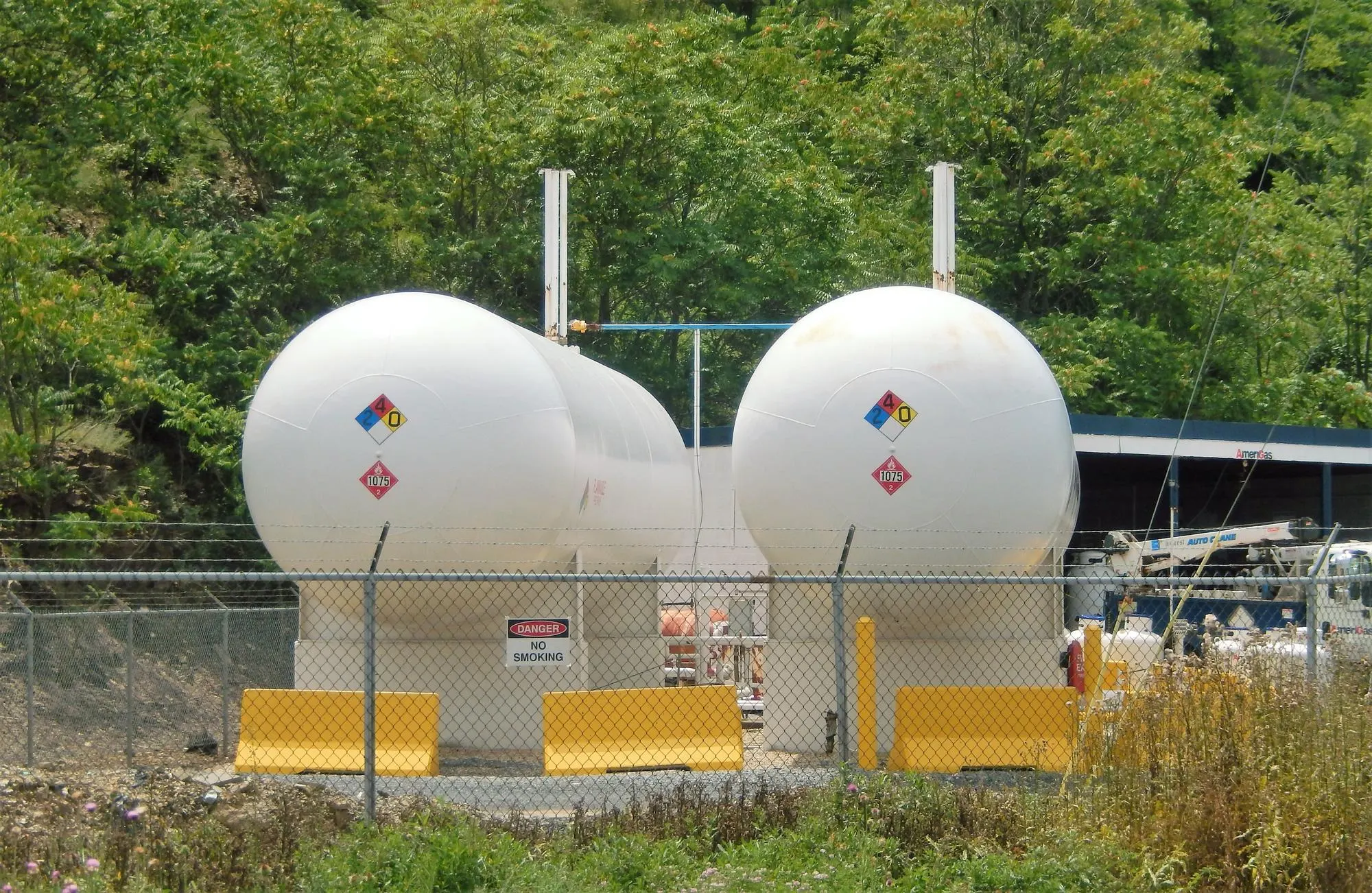
Bulk Delivery vs. Small-Load Transport: The Rules Shift With the Load
Bulk Cargo Tank Deliveries
A distributor running a bulk cargo tank truck carries the heaviest compliance load. This is what applies once you’re moving propane by the truckload:
- Cargo tank testing schedules under Part 180, tracked by test date
- Mandatory placarding once quantities cross regulatory thresholds
- A hazmat safety permit, required for larger shipments tied directly to volume carried
- Roadside violations that follow when any one of these gets missed
Small-Load Cylinder Transport
Moving a handful of cylinders between a fill station and a job site looks simpler on the surface. It still carries its own set of obligations:
- Correct markings on every cylinder, checked before each trip
- Secure tie-downs that keep cylinders upright throughout transit
- A lighter paperwork burden, since permit thresholds rarely apply
- Distance from ignition sources, maintained the entire drive
Knowing which category your daily operations fall into helps you build the right abidance routine. You don’t over- or under-prepare for inspections this way. However, many distributors run both, which means keeping two sets of requirements straight at once.
The Right Coverage for the Realities of Propane Transport
Equipment still fails on occasion. Weather can turn a routine delivery into a difficult one. Even a well-documented cylinder can leak. When that happens, compliance paperwork won’t cover the damage.
So, PropanePro is built specifically for LPG dealers and distributors. It covers general liability, commercial auto, workers’ compensation, property, excess liability, and inland marine. PropanePro also holds an A+ rating, which means a superior financial ability to pay claims when they come in. If you’re ready to see how PropanePro fits your operation, talk to your broker or contact us directly. We’re happy to walk through it with you.
FAQs
1. What is the 80/20 rule for propane tanks?
Tanks are filled to 80% of capacity. The extra 20% gives the gas room to expand as temperatures rise. Skip this margin, and pressure builds fast inside the tank. The 80/20 rule is what keeps that pressure in a safe range during transport and storage.
2. Can a propane tank be transported lying down?
No. Always keep the tank upright during transport. Laying it on its side lets liquid propane reach the relief valve. That valve is built to vent vapor instead of liquid. This mismatch can create a serious safety hazard on the road.
3. How do you secure a propane tank in a truck bed?
Follow these steps before you drive to keep your propane tank safe:
- Stand the tank upright and confirm the valve is closed
- Anchor it with straps or a rated bracket
- Keep it clear of tools or anything that could strike the valve
- Recheck the tie-down before longer stretches of driving
4. Can you ratchet strap a propane tank?
Yes, a ratchet strap works fine for this job. The strap needs to hold the tank upright and snug against a fixed point in the vehicle. Steer clear of the valve area when tightening it down. Give it a quick check partway through longer drives.