







Summary
- Underground utility strikes during horizontal directional drilling work remain one of the most preventable yet costly contractor failures.
- Getting the technical execution right at every phase is what keeps projects on track and liability exposure in check.
- In this guide, we break down the process, the critical execution factors, and what every utility contractor needs to know.
In 2024, PG&E’s April 2025 National Safe Digging Month report recorded over 1,300 incidents of damaged underground utility lines in Northern and Central California alone. 60% of those incidents occurred without prior 811 notification.
For horizontal directional drilling contractors, these numbers land differently than they do for most other utility workers. Crossbores and inadvertent surface returns are the most consequential risk categories in HDD horizontal directional drilling work. They’re also largely preventable when the technical fundamentals are followed consistently.
This guide covers what every utility contractor needs to understand about the execution factors and the liability exposure that comes with it.
What Does Horizontal Directional Drilling Entail
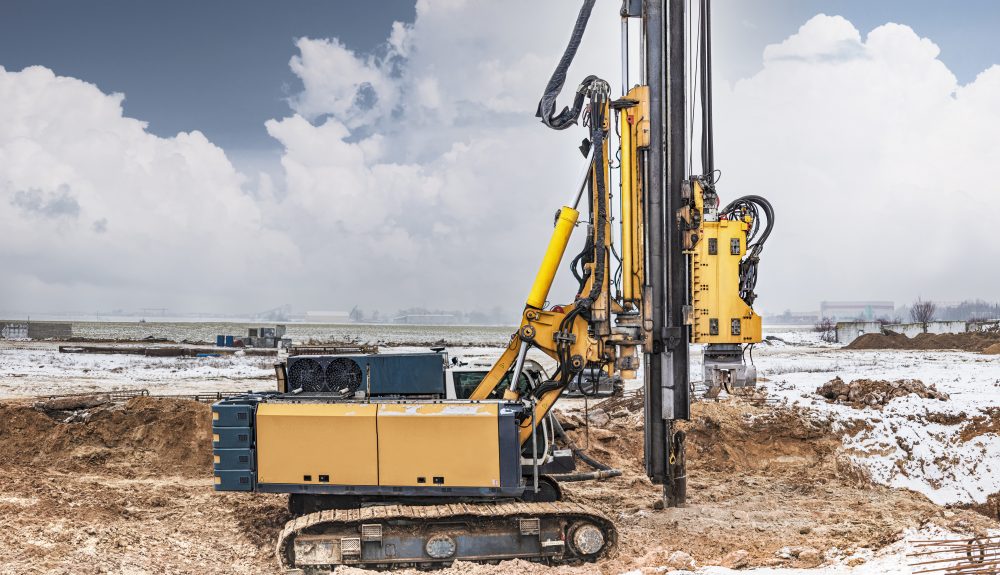
Horizontal directional drilling is a trenchless installation method used to place pipelines, conduit, and cables beneath roads, waterways, and existing infrastructure without open-cut excavation.
An HDD rig drives a drill string along a pre-planned underground path, before pulling the product pipe back through the completed borehole.
The process runs in three phases:
- Pilot bore: The drill head follows the designed alignment underground. Steering happens in real time based on locating system data and operator feedback from torque and thrust readings
- Reaming: The borehole is enlarged to a diameter sufficient for the product being installed. Multiple reaming passes may be required, depending on soil conditions and product size
- Pullback: The product pipe is attached to the reamer and pulled back through the completed bore from the exit point to the entry point
Each phase carries distinct technical requirements. Each also carries its own failure modes. For contractors carrying utility contractor insurance, understanding where those failures occur is what makes the difference between a defensible claim and an exposed one.
Must read: How Construction Insurance Coverage Is Tested During High-Risk Projects
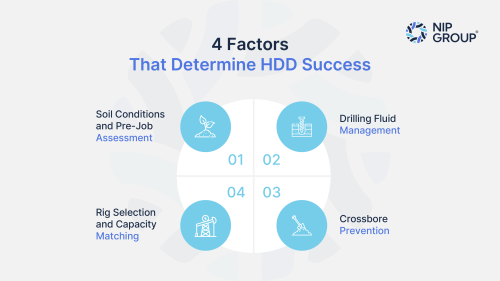
Four factors consistently separate clean HDD projects from ones that generate problems. Each one is worth addressing before the rig arrives on site.
Soil Conditions and Pre-Job Assessment
Soil type drives nearly every other technical decision on an HDD project. Cobbles or boulders, and mixed unconsolidated formations create steering difficulty and equipment wear that sand and clay don’t.
A geotechnical investigation before drilling gives the operator data to plan the bore profile and select appropriate tooling.
Contractors who skip this step often discover mid-bore that actual conditions don’t match the plan. Correcting course at that point is expensive and sometimes impossible without surface intervention.
Drilling Fluid Management
Drilling fluid horizontal drilling operations depend on more than lubricating the drill head. It stabilizes the borehole wall, cools the bit, and carries cuttings back to the surface.
Managing fluid returns throughout the bore, monitoring pressure, viscosity, and volume continuously, is what prevents frac-out and inadvertent returns.
A frac-out occurs when drilling fluid pressure exceeds what the soil formation can contain, forcing fluid to the surface.
Near waterways, in environmentally sensitive corridors, or in urban rights-of-way, a frac-out generates immediate environmental liability. Matching fluid properties to actual encountered conditions rather than planned conditions is where this risk gets managed.
Rig Selection and Capacity Matching
A horizontal directional drilling rig selected below the capacity requirements of the project will struggle through pullback and risk stalling or damaging the product pipe. Oversized equipment in tight urban rights-of-way creates access and positioning problems that affect both safety and schedule.
Matching rig capacity to bore length, diameter, soil resistance, and product weight is a pre-job engineering decision. It shouldn’t be made in the field after problems have already started.
Crossbore Prevention
Crossbores, drilling through an existing utility line, are among the most dangerous and costly failures in horizontal directional drilling work. Outdated or incomplete utility mapping is a documented contributor to crossbore incidents.
Calling 811 and using vacuum excavation to verify utility locations are the baseline requirements in any corridor with existing underground infrastructure. These steps are not optional on busy job sites with tight schedules.
Must read: Utility Contractor License and Insurance Requirements
The Liability That Follows Technical Failures
Horizontal directional drilling work generates liability exposure that standard utility contractor insurance wasn’t built to address. A few scenarios worth knowing:
- A frac-out during drilling reaches a nearby waterway. Environmental remediation costs and regulatory penalties follow. Standard general liability doesn’t respond to this. Pollution coverage does.
- A crossbore damages an existing gas line. Property damage, emergency response costs, and third-party injury claims arrive at the same time. The contractor who last drilled through that corridor is the first name in the investigation.
- A horizontal directional drilling rig damages the product during pullback. Material replacement costs and project delays fall to the contractor. Inland marine coverage needs to reflect the value of what’s being installed.
- An operator is injured during rig setup in a restricted right-of-way. Workers’ compensation for utility work needs to account for the actual injury profile of below-grade operations.
Coverage Built for the Complexity of This Work
Horizontal directional drilling done well reduces incidents significantly. It doesn’t eliminate the exposure. A well-run project can still generate a claim from an event outside the contractor’s control.
UtilityPro is built specifically for utility contractors performing HDD and related underground installation work. It covers:
- General liability
- Workers’ compensation
- Composite-rated commercial auto
- Inland marine
- Pollution liability
- Excess liability up to $25 million
- Cyber liability
All structured around how utility installation happens in the field. The program is available nationwide, including California, and backed by more than 35 years of utility contractor insurance expertise. Talk to your broker about UtilityPro or contact us directly.
FAQs
What is a horizontal directional drill?
A horizontal directional drill is a trenchless boring machine used to install underground pipelines, cables, and conduit without open-cut excavation. A horizontal directional drilling rig steers a drill string along a pre-planned underground path using a downhole locating system. It’s the preferred method for crossing roads, waterways, and existing infrastructure with minimal surface disruption.
Is horizontal directional drilling expensive?
Horizontal directional drilling is more expensive upfront than open-cut excavation, but the total project cost often favors HDD when surface restoration is factored in. Key cost drivers include:
- Bore length and diameter
- Soil conditions and geotechnical complexity
- Rig size and mobilization requirements
- Product type and pullback weight
In urban corridors and environmentally sensitive areas, HDD regularly proves more cost-effective than trenching once road repair, traffic control, and remediation costs are counted.
What are the disadvantages of horizontal directional drilling?
The disadvantages of horizontal directional drilling are worth knowing before committing to the method. The main ones:
- High equipment and mobilization costs compared to open-cut methods
- Frac-out risk when drilling fluid horizontal drilling operations encounter formations with lower pressure tolerance than planned
- Limited steering ability in certain rock or cobble formations
- Crossbore risk in corridors with outdated or incomplete utility mapping
Which is the best insurance for horizontal directional drilling?
The best insurance for horizontal directional drilling contractors covers the exposures specific to underground utility work. That means pollution coverage for frac-out events, inland marine for product damage during pullback, workers’ compensation structured for high-hazard below-grade operations, and excess liability for larger bore projects. UtilityPro is built specifically for utility contractors doing this work. Ask your broker about it.